


 SIGN UP FOR OUR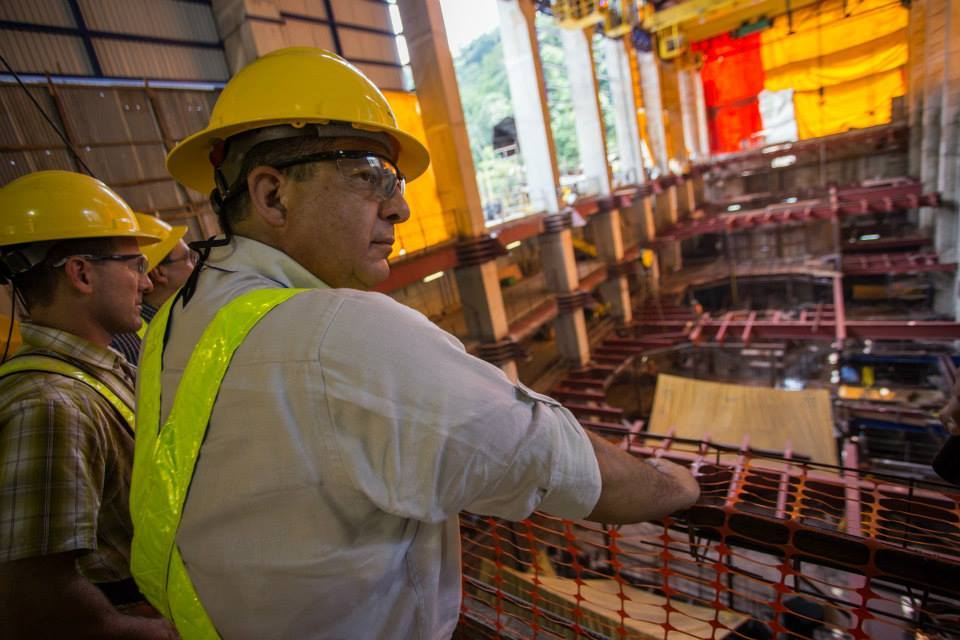
Costa Rican president, Luis Guillermo Solis tours the Reventazon hydroelectric plant while still under construction in 2014. (Casa Presidencial)
The first of four turbines at Costa Rica’s Reventazon hydroelectric plant, recently made famous after the discovery of ancient, 12,200-year-old human settlements by workers at the site, is set to come online by the end of the month, according to project officials.
Officials announced that the plant, located in Siquirres, Limón, was connected to the country’s power grid at 11:28 a.m. on Wednesday morning.
The plant will initially contribute 73 MW of power to the grid, enough to supply 125,000 households, according to the Costa Rican Electricity Institute (ICE).
Once all four turbines are put online, the plant will produce 305.5 MW, enough to supply 525,000 homes, ICE said.
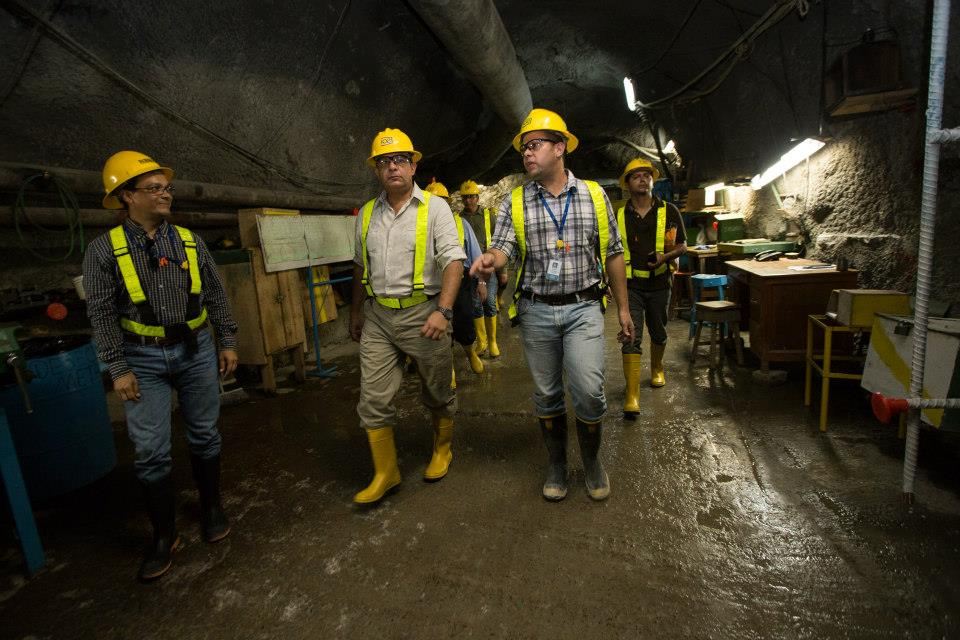
Costa Rican president, Luis Guillermo Solis tours the Reventazon hydroelectric plant while still under construction in 2014. (Casa Presidencial)
Reventazon is the largest hydroelectric plant in Central America. Construction of the US $1.4 billion plant began in 2010.
Ancient human settlement
Besides being the largest hydroelectric project in Central America, Reventazon also made headlines last week after radiocarbon dating of items from 66 ancient human settlements discovered by workers at the site determined the items to be 12,200 years old, representing the oldest find of its type in Central America to date.
Exploration of the site, which covers a total of 1,018 hectares in the canton of Siquirres, began under the supervision of the National Archaeological Commission (CAN) in 2006, but the delicate task of extracting and recovering the site’s artifacts began only this year.
Last week, officials announced that radiocarbon dating revealed hat the items recovered at the site date to the Paleo-Indian Period, which spans from approximately 15,000 B.C. to the end of the Pleistocene Ice Age, or about 7,000 B.C. The period marks the first know inhabitation by Homo sapiens of what later became known as the New World, during a period when massive creatures like the American mastodon still walked the Earth.
Tools used for carving, hunting and gathering were also discovered, and items indicating that humans at the ancient settlements may have even engaged in small-scale farming were also found.
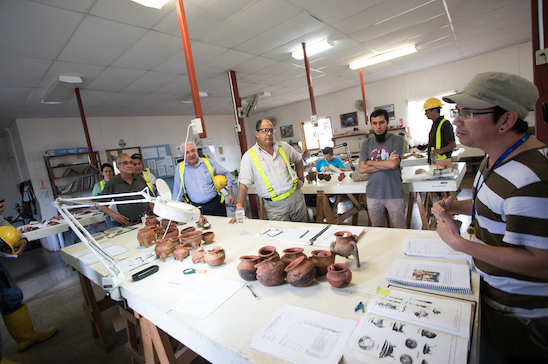
(FILE/ARCHIVE – Courtesy Casa Presidencial)
Dated at 12,200 years old, the items are the oldest evidence of human settlement ever discovered in the region.
Most of the items will be transferred to the Department for Protection of Cultural Heritage at Costa Rica’s National Museum, though some items that due to their size or weight cannot be transported will stay in place to be located in a cultural center that will be built on the premises of the future hydroelectric plant.



