


 SIGN UP FOR OUR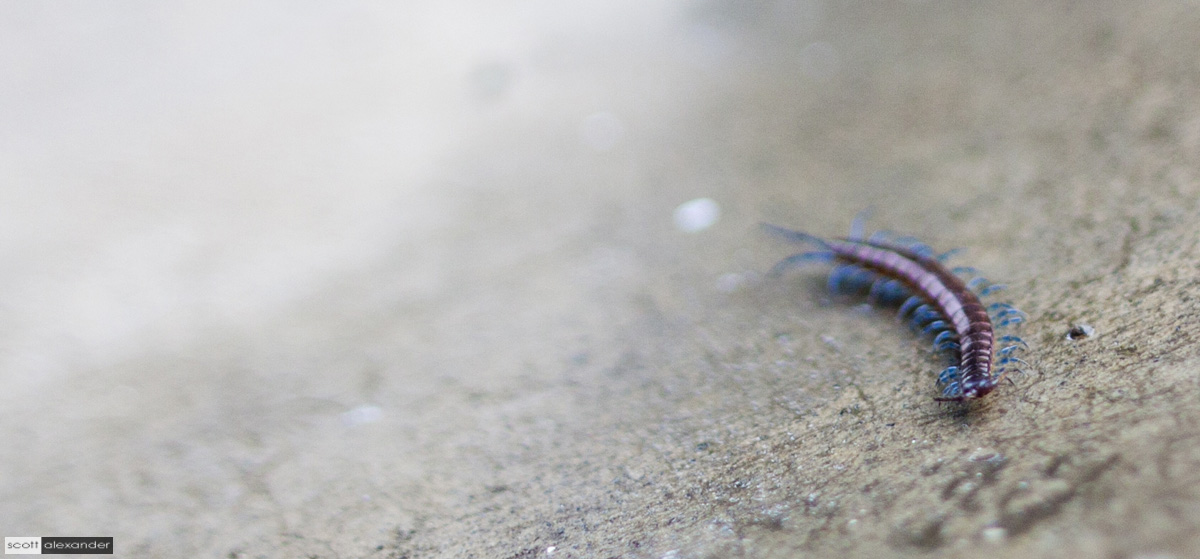
An Exotic Anthropod
A ridiculously colored thirty-sixipede scurried across my porch. It was between rains one leisurely afternoon in Herradura when this striking little creature decided to make an appearance, jump-starting my mind. After my brain finished processing this visual oddity, I bolted inside to get my camera before he could make his escape (delaying him first by putting him on top of my bike) and then snapped off a few shots of this curious little anthropod.
As he disappeared off the porch and into the yard, I realized that I would find beauty here not just in the birds, the trees, the landscapes, the culture, the people, and the streets; I would find it easily in the insect world of this exotically lush paradise, as well. In my earliest days in Costa Rica, I spent hours upon hours inspecting the leaves and branches of the almond tree in the front yard, trying to find the various bugs living, working, and playing there. And as they were continuously flying in and out of the tree, I developed an interest in butterflies.
I live in Jacó now and there’s an almond tree in the front yard here as well. Slightly larger than the other one. While it doesn’t have nearly the butterfly traffic as the other tree, scarlet macaws fly into it regularly. So six of one, half-dozen of the other in terms of in-your-face beauty. And even though the almond tree doesn’t get that many butterfly visitors, there is a bush close by that is playing home to a variety of insects. Two days ago, I found a butterfly chrysalis (the cocoon where they do that voodoo that they do, metamorphosizing from caterpillar to butterfly), not even knowing what it was at first since I had never actually seen one in person.

A Butterfly Chrysalis in Jacó, Costa Rica.
Never knew that a good number of butterfly chrysalides have a shiny metallic exterior. Neat!
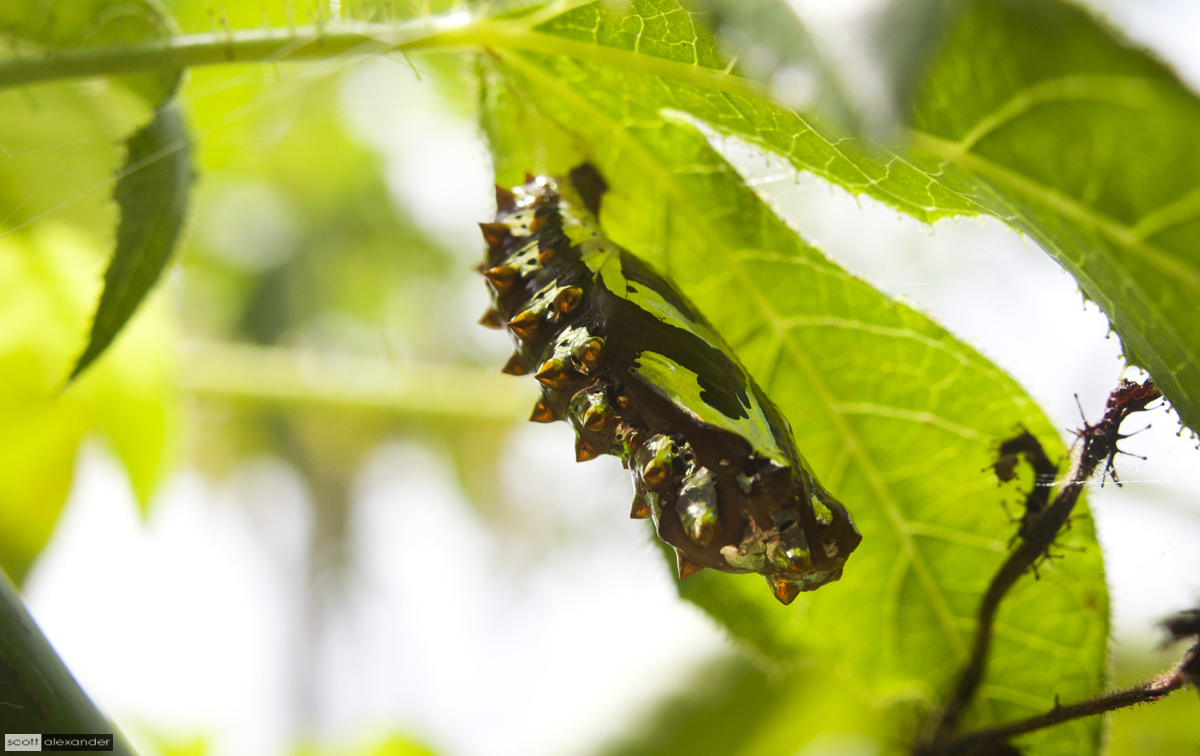
The shiny metallic chrysalis reflects the green ot the leaves.
I wish I could find out what species of butterfly is going to emerge from it. However, with there being about 15,000 to 20,000 species of butterflies in the world – Costa Rica is home to 10 percent of the world’s butterfly population, the single largest concentration in any country – it’s time-consuming to try to identify them by matching up my pictures against photos in existing databases. Plus, while most of the larger online resources, like Butterflies and Moths of North America (BAMONA), are fairly extensive, the collection of photographs are largely of butterflies and moths in their final stages of life, not as pupae. What’s needed is some butterfly recognition technology similar to Facebook’s face-recognition technology. It can’t be that hard. Engineers and researchers: get on that.
When I can, I submit images to BAMONA. It’s a simple but worthwhile contribution that I can make to the planet, I feel. And I would be lying if I said I didn’t have this fanciful notion that if all of the bees disappear from the face of the earth due to the ongoing and troublesome problem of colony collapse disorder, that the butterflies will be standing by, ready to be trained to do some worthwhile pollination for the food chain. We should be looking at which species of butterflies are more adaptable and open to trying new things. Not like swinger parties. Like pollinating commercial crops and not just pretty blue and purple flowers. (Thanks for that, butterflies.)
I’m sure I must sound like some nutty hobby lepidopterist or entomologist. But I’m not, really. Up until I moved here four months ago, and for the five years prior, my lenses were primarily focused on models and pornstars in Miami. Now they’re focused on butterflies and birds. And everything else: surfers, sunsets, forests, people, and all the odd little peculiarities in nature and life that fill this beautiful country. It’s a drastic change in subject matter, no doubt. But it’s a nice shift. It’s rewarding on different levels.
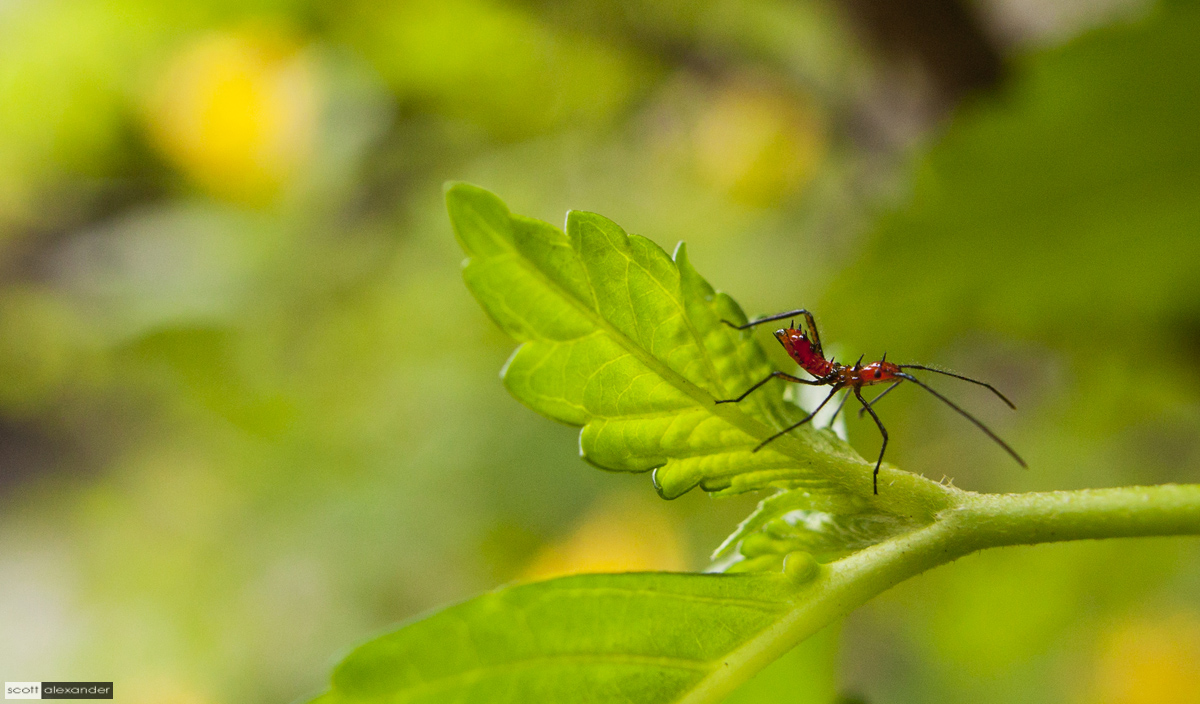
Unidentified red insect in the bush in the yard.
I’ve always been one to shoot what passes before my eyes, spending a lot of time doing street and life photography in addition to the model work. So there’s no real adjustment for me in what I’m doing here; only the scenery has changed. Where my eyes are looking is different.
So I’ll continue to photograph the birds, the trees, the landscapes, and so on and so forth. And models. (It would be a horrible shame not to photograph models against the endless variety of backdrops this country offers.) I wish I could spend more time in San Jose because that place is a street photographer’s paradise. My only hope is that I can somehow give back to this country that is so graciously hosting me and which has already given me so much.
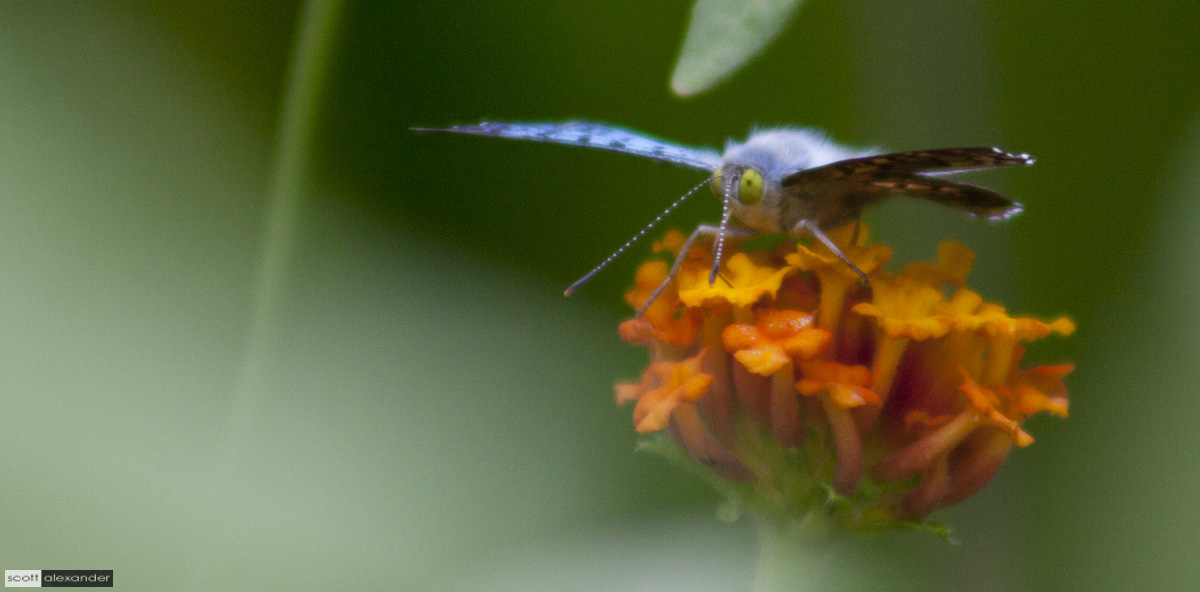
I have yet to successfully identify this awesome little species.
Scott engages in creative endeavors, mostly centered around photography and writing. Some of his work and personal stories can be found on his site at helloimscott.com



