


 SIGN UP FOR OUR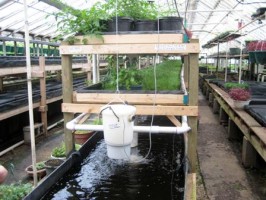
Source: Wikimedia Commons
Guanacaste is the aquaponics capital of Costa Rica and perhaps of Central America. This agricultural discipline has been lauded for the way it integrates principles of sustainability. The most basic aquaponics systems involve raising aquatic animals and growing plants in a way that is symbiotic for all species, but the complexity of these systems can be increased for the purpose of improving the overall efficiency and sustainability. In El Guarco, province of Cartago, an entrepreneur intends to expand his profitable aquaponics system.
The Costa Rica Star first reported on aquaponics as a viable solution in an article related to floating cities, a resource-based economy system that was explained as part of the 2009 Breathe Costa Rica festival, similar to the ongoing Envision Festival. On that article, aquaponics was presented as a way for:
the proposed floating communities of Project Venus [to] grow a lot of their own food [.] A floating city would be obligated to observe horticultural practices and techniques such as hydroponics and aquaponics. Mastery of aquaponics and hydroponics will surely be a highly sought-after skill in future floating cities.
In 2012, the Costa Rica Star reported on the operations of Finca Neptuno in Guanacaste:
Scientific exploration of aquaponics and permaculture takes place at Finca Neptuno in Canas, a town close to the Corobici River in Guanacaste. Two hundred acres of land have been reserved for this project by the Mendocino Ecological Learning Center, Nor Cal Aquaponics and AquaBiotic systems.
Finca Neptuno was a fish farm. Once the Nor Cal Aquaponics took over, they cleaned up the land and the ponds and resumed breeding of crayfish, eels, shrimp, and of course tilapia, catfish and other edible species. Then came the floating farms and recirculating aquaponics systems that convert fish waste into fertilizer. The farm is now being used to produce rice in a large scale, growing on shallow crayfish ponds.
These days, aquaponics has also extended to the Monkey Farm in Playa Ocotal in Guanacaste:
Aquaponics uses 95% less water than conventional farming, while producing five times the amount of produce. Using less water is very important in Guanacaste, which experiences six months of drought every year. [Volunteers] They have planted fruit trees and herbs and re-started an aquaponics system which is growing both tilapia and vegetables.
In early 2014, Leticia Vindas Quiros reported on Alessandro Colagrosso, a graduate from the Technological Institute of Costa Rica who is growing vegetables and edible fish that are ready for retail distribution in Costa Rica. What Mr. Colagrosso intends is to show off his aquaponics system so that other farmers will become interested. He plans to highlight other applications such as a butterfly and worm breeding station that can be sold as educational scientific projects.



