


 SIGN UP FOR OUR
 After brief deliberation and disagreement, geologists from the two main Earth science research centers in Costa Rica have come to the agreement that the recent eruptions of the Turrialba volcano in the province of Cartago are magmatic rather than phreatic. They also agree that the ongoing activity could result in stronger volcanic eruptions such as the one that sent heavy ash clouds over the Central Valley earlier this week.
The presence of magma in the laboratory reports of the Observatory on Seismicity and Volcanology of Costa Rica (Spanish acronym: OVSICORI) and the National Seismology Network (Spanish initials: RSN) has prompted emergency management officials to leave their warning level in the Turrialba region, which is currently yellow, unchange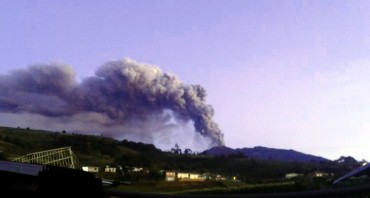 d. As reported by Joselyne Ugarte of online news daily CRHoy.com, volcanologists on a press conference last night mentioned that an eruption had occurred just minutes before the conference started:
What is happening now is that magma is coming out, but in small quantities. This magma is accompanied by old volcanic matter that has turned to ash over time. Magma has been coming out of the Turrialba since the first strong eruption.
It is important to note that magma is molten Earth matter that lies deep down in the crust. Basaltic magma is a bit more fluid and made of igneous rock. At the highest temperatures, magma turns into lava as it comes up through the surface; perhaps through an existing crater, or -as was the case in Costa Rica just a few days ago- the volcanic material may just break through the surface and create a new caldera. Until recently, the Turrialba has exhibited two main craters; the ongoing activity could merge these two depressions into a single one, thereby putting cartographers to work in creating new maps of the colossus.
Geologists in Costa Rica are still not sure how much lava could come out in the future, but they believe there is plenty of volcanic ash that could fly out into plumes and clouds that could once again reach the Central Valley. The main concerns at this time are acid rain and a heavy concentration of ash, which affect livestock, dairy production, people with respiratory conditions, and electronic equipment kept outdoors.



