


 SIGN UP FOR OUR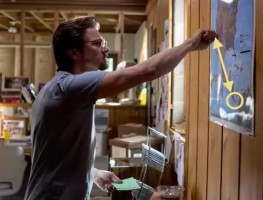
Source: Focus Features
A penetrating film that deals with a very delicate, yet factual and historic, Cold War narrative, is now available on DVD. Kill the Messenger was modestly released to regional audiences in the United States last year; it has received positive reviews thanks to actor Jeremy Renner’s powerful performance as the late journalist Gary Webb.
Kill the Messenger is based on two books, one of them being Dark Alliance, penned by Webb before he died under strange circumstances. Here’s a short description of the storyline, taken from IMDB:
A reporter becomes the target of a vicious smear campaign that drives him to the point of suicide after he exposes the CIA’s role in arming Contra rebels in Nicaragua and importing cocaine into California. Based on the true story of journalist Gary Webb.
As an investigative journalist, Webb uncovered a Dark Alliance indeed, and a significant portion of what transpired during the final proxy battle of the Cold War took place in Costa Rica. Writing for The Real News, journalist Jeff Cohen from Park Center for Independent Media at Ithaca College recently interviewed Sharmini Peries, executive producer of Kill the Messenger. During the interview, this much was explained about Costa Rica’s role in the CIA crack cocaine smuggling scandal:
And we should say that Oliver North, the colonel who was involved in what you’re talking about, where the Congress had banned U.S. appropriation, U.S. tax money to go to these right-wing Contras in Nicaragua, Colonel North was part of the undercover supply operation to keep them funded. And if you look at Oliver North’s notebooks, he’s got one reference to $14 million supporting arms coming from drugs. That’s in Colonel Oliver North’s notebook. Another reference is DC-6 out of New Orleans bringing drugs into the U.S.
And so what’s important here is that in about 1989 the U.S. ally Costa Rica, on the southern border of Nicaragua, their narcotics commission did an investigation and found that because of the Contras, their activity on the southern border of Nicaragua, which is Costa Rica, that they were dealing in arms and drug trafficking. And the narcotics commission asked the president to ban certain U.S. leaders from Costa Rican soil. President Arias of Costa Rica, who was a U.S. ally and a hero of the mainstream media at the time, they ordered that Colonel North never set foot in Costa Rica; the U.S. national security adviser, Poindexter (that’s the equivalent of a Condie Rice); the CIA station chief in Costa Rica was banned; U.S. Ambassador. They were banned from setting foot in Costa Rica. Associated Press did cover that story. The mainstream dailies refused to touch it.
And, again, part of this is the mainstream dailies, some of the reporters, the elite reporters, are very close with the [CIA] . Some of them are afraid to be accused of being unpatriotic or liberal. And in the early years, ’85, ’86, the Reagan administration still had intimidated many of these reporters.
A Cautionary Tale for Modern Times
To an extent, Kill the Messenger is a cautionary tale for the journalism profession in general. Webb has gotten somewhat of a comeuppance as former CIA officials have come forward to apologize for their participation in this amazing clandestine operation, which would unleash yet another chapter in the protracted War on Drugs. The website of Fairness and Accuracy in Reporting (FAIR.org) published the following a few months ago:
As Alexander Cockburn and Jeffrey St. Clair of CounterPunch (10/17/14) wrote, the CIA report “proved on close reading to buttress Webb’s accusations.” In one passage, a cable very explicitly instructed field officers in Costa Rica to look the other way when word of a Contra-linked drug deal surfaced. And one of the more remarkable stories in “Dark Alliance”—about the CIA intervening with the Justice Department to retrieve cash for one of the Contra-affiliated drug dealers—was confirmed by the CIA report.
That report wasn’t the only thing the Post editor baldly mischaracterized. At one point, Leen argued that even some of Webb’s admirers agree he was wrong […]
On the eve of the theatrical release of Kill the Messenger, the San Francisco Chronicle cited the first news media mention of what would become Dark Alliance:
1985: Associated Press
Revelation: The story, citing unnamed U.S. law enforcement sources and American volunteers who worked with the Contras, described how rebel units operating in northern Costa Rica “engaged in cocaine smuggling, using some of their profits to finance the war against Nicaragua’s leftist government.” The story did not mention the CIA.
Reaction: Federal officials denied any knowledge of drug trafficking by the Contras. The story provoked little coverage by others in the national press corps.
Kill the Messenger, and the stories that the film is based on, are extremely relevant to our times. Many viewers who are not familiar with Dark Alliance are going to be aghast at the turns of events, but what is more damning is the relentless pursuit for obfuscation conducted by the powers that be, and how that pursuit often extends to key players in the news media. Dark Alliance is hardly the only global scandal that U.S. officials have tried to obscure. Let’s cite three recent examples, which have all been mentioned on the pages of The Costa Rica Star:
- The U.S. Air Force transporting nearly 24 tons of cocaine from the Daniel Oduber Quiros International Airport in Liberia to Miami, and later promising to never do it again.
- The CIA using Costa Rica as an office to develop a Twitter-like social network to spy on unsuspecting Cuban citizens.
- The Edward Snowden revelations on the espionage apparatus of the U.S.
In the end, Kill the Messenger is a very important film that deserves wider distribution due to its historical subject matter. If you’d like to learn more about Costa Rica during the Cold War era, please watch this DVD and pass it on to interested friends and relatives.



