


 SIGN UP FOR OUR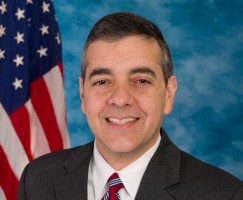
David Rivera
Tenuous security controls at the Peñas Blancas border crossing checkpoint between Costa Rica and Nicaragua helped a controversial former Member of the United States Congress and a close associate hide from the law. David Rivera represented South Florida’s 25th District from 2011 to 2013; his controversial background includes allegations of setting up a shadow reelection campaign with the help of a political operative who is now testifying against him.
According to a news report recently filed by Marc Caputo of the Miami Herald, a former girlfriend of Mr. Rivera has confessed to a federal grand jury that the former U.S. Representative orchestrated an intricately umbrageous political campaign in South Florida, which included a straw man candidate who confessed to his participation in the electoral swindle as he plead guilty
The sham candidate, Justin Lamar Sternad, plead guilty to charges of conspiracy to defraud the U.S., and he named Ana Alliegro, an ebullient Cuban American blonde, as the manager who orchestrated the phony campaign on behalf of Mr. Rivera. This spectacular political hustle was uncovered through investigative reporting by the Miami Herald in 2012, and months later the Federal Bureau of Investigations (FBI) raided Ms. Alliegro’s apartment.
Thinking that the case would somehow dissipate, Ms. Alliegro fled to the historical city of Granada in Nicaragua. According to her testimony to a federal grand jury i n Miami, Mr. Rivera arranged for her escape, going as far as to purchase plane tickets and helping her pack for the trip. Ms. Alliegro operated a beauty salon in Nicaragua, where she continued to get some support from Mr. Rivera. According to the Miami Herald:
While she was away, she said, Rivera visited at least six times in Nicaragua. Sometimes he entered through Costa Rica to hide his tracks. He also paid for her rent, she said, and was such a frequent visitor that Nicaraguans called him “Don David, el esposo [the husband.]”
The Miami Herald is not the only newspaper that has reported on Mr. Rivera and Ms. Alliegro’s travels through Costa Rica to cover their tracks. Writing for La Prensa of Nicaragua, correspondent Josue Bravo filed a report from Costa Rica, which mentioned:
Alliegro, who is wanted by the FBI in a corruption case, passed through the Peñas Blancas border checkpoint on April 22nd, 2013, according to official immigration records. She previously left Nicaragua on March 1st; however, immigration records in Costa Rica do not reflect her entry.
Ms. Alliegro would exit Nicaragua through Peñas Blancas a few more times during her 18-month stay in Granada. Presumably, Ms. Alliegro would leave Nicaragua in order to renew her tourist visa in that country due to her status as a perpetual tourist. Costa Rica and Nicaragua share similar immigration laws in the sense that tourists who hold passports from certain jurisdictions such as the U.S., Canada and the European Union can enjoy permanent vacations as long as they exit and reenter the country every 90 days with an onward ticket. Still, Ms. Alliegro and Mr. Rivera appear to have found a way to avoid getting their passports stamped in Costa Rica.
According to an interview given to La Prensa by Ms. Alliegro, she was stopped by two suspicious men in suits in March of 2014. She was walking to a market in Granada when these men forcefully slapped handcuffs on her before throwing her into a taxicab. She was taken to a local police precinct before being transported to Managua, where she was in custody a few days before her summary deportation to the United States.
Ms. Alliegro told La Prensa that she does not understand how President of Nicaragua Daniel Ortega can label himself an enemy of the U.S. if he allowed U.S. agents to snatch her right off the streets of Granada. She believes she was closely monitored by members of the Public Citizen Committees of Nicaragua, which are civic groups believed to actually carry out espionage on behalf of the Ortega regime.



