


 SIGN UP FOR OUR
 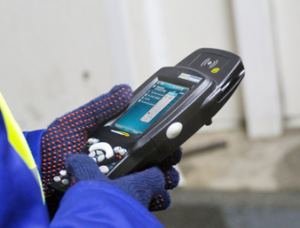 When it comes to conducting democratic elections, Costa Rica does not like to cut corners. After President Laura Chinchilla was elected in 2010, the Supreme Electoral Tribunal (known as TSE for its acronym in Spanish) decided to completely modernize its ballot collection and counting processes. In November of 2010, the TSE adopted Radio Frequency Identification (RFID) technology to improve the monitoring and counting of its ballots.
Prior to RFID, exit polls and manual counting of electoral ballots were laborious affairs that were not impervious to human error. Bags filled with paper ballots were sometimes delayed traveling from one part of the country to another, and anxiety filled the air whenever a bag was thought to have been lost. Elections are deeply treasured by Ticos, and to that extent the TSE invested in RFID tags and readers for the ballot bags and the badges worn by employees and officials at the polling stations. Over 5,000 polling places were fitted with RFID technology in late 2010 for the county and municipal elections. The TSE now expects that RFID technology will be used at over 7,000 polling stations in the 2014 general elections. The tech firm which handled the modernization was Grupo Diverscan, S.A.
Since the successful integration of RFID by the TSE, the technology has really taken off in Costa Rica. Here are some recent developments which underscore the growth of this sophisticated technology:
Retail Logistics
RFID is used extensively by retail giants like Wal-Mart, as well as major local appliance manufacturers like Conair to track shipments of merchandise around the world.
Security and Investigations
Asset tracking and security are two fields in Costa Rica where RFID is making an impact. Moore Stahl Security Services is just one security firm that uses RFID to safeguard the interests and property of their clients. Microtronics in San José specializes in providing advanced RFID and GPS security solutions. Private detective firms can track philanderers and other cheaters with geo-location by cleverly planting one of these devices on a vehicle or a purse.
Ecological Protection
Ticos always find a way to adopt new technologies into their nature conservation efforts, and RFID is no exception. The Corcovado Foundation in Drake Bay (Osa Peninsula) entices nature lovers to contribute to their reforestation efforts by attaching a RFID chip to each tree they plant. Donors can then track the progress of their trees on the Internet. In Guácimo de Limón, sloths in a cocoa plantation are tracked with RFID collars to better understand how the passive creatures use their habitat prior to making any decisions related to farming.
Job Creation
Costa Rica has been successful in attracting high-tech firms to take advantage of the well-educated workforce. Chip maker Intel and semiconductor manufacturer Triquint are just two of the tech firms that are taking Costa Rica closer to becoming the “Silicon Valley of Central America.” Both Intel and Triquint are considered by Ticos as the best employers in the country, and to this extent both have shown great community involvement and corporate responsibility.
RFID technology is now bringing another tech giant to Costa Rica. National Instruments is making a $700,000 investment in the country by opening a shared operations center. The announcement was made last September, and in attendance were President Laura Chinchilla and Dr. Keilor Rojas from the Ministry of Science and Technology.



