


 SIGN UP FOR OUR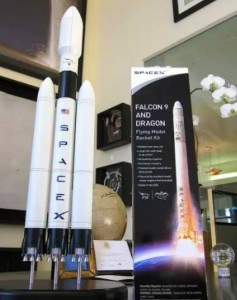
SpaceX Falcon 9 and Dragon Model
“The longterm goal of SpaceX is to develop the technology necessary to make life multi-planetary, so to enable a self-sustaining civilization on Mars.”
Such were the words of Elon Musk, the co-founder of several successful and innovative ventures such as PayPal, Tesla Motors and SpaceX – the first commercial space exploration enterprise to achieve round-trip space flight, a feat previously reserved to government agencies such as NASA in the United States and Roscosmos in Russia.
Elon Musk was sitting across from Jon Stewart, the host of Comedy Central’s The Daily Show, when he suggested the idea of human settlements in Mars, but the South African-born tech entrepreneur was not joking. He cited some of our planet’s issues, such as looming energy and food crises, as reasons to think about colonizing other planets. He discarded the idea of Moon colonies, as Earth’s satellite is:
“[…] a small rock, but it’s got no atmosphere, limited natural resources.”
The Tesla and SpaceX CEO admitted that manned space travel to other star systems is almost impossible, and thus the idea of Mars colonies is a lot more feasible, as it would prompt humanity to continue improving on space transport technology.
A manned mission to Mars is one of the objectives of the Ad Astra Rocket Company, the commercial space exploration firm founded by retired NASA astronaut Franklin Chang-Diaz. Ad Astra’s VASIMR project is probably the best chance the space community has right now to reach the Red Planet. The VASIMR engine is being developed simultaneously at the Houston Space Center and at EARTH University in Guanacaste, Costa Rica.
At the end of April, SpaceX will undergo a big test with the launch of the Falcon 9 rocket from Cape Canaveral in Florida. The Falcon rocket will carry the Dragon space capsule, expected to dock with the International Space Station (ISS). Ad Astra Rocket and NASA expect to begin testing VASIMR at the ISS by 2015.
For dynamic visionaries like Franklin Chang-Diaz and Elon Musk, space exploration has no limits.



