


 SIGN UP FOR OUR


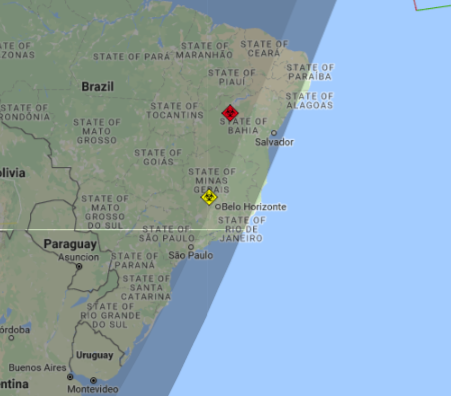
In addition, the ministry will send 350,000 doses of vaccine to the neighboring state of Espirito Santo after the appearance of apparent yellow fever cases in cities near the border with Minas Gerais, which has declared a health emergency.
Health Minister Ricardo Barros said that although the authorities are on “alert,” the situation is “under control.”
“We are on alert. The recommendation for vaccination in 19 states is ongoing and the vaccine is available,” he said.
Minas Gerais Gov. Fernando Pimentel promised that the authorities would provide all necessary aid to deal with the virus.
“Yellow fever is a disease with a high degree of mortality. The best way to confront it is with vaccinations, which is what we’re doing massively in the municipalities where the disease has been detected. We have to redouble our efforts, not scrimp on resources or waste time,” he said.
Experts distinguish two types of yellow fever that differ in terms of their vectors: the rural form, transmitted by the Heomagogus and Sabethes mosquitoes, which mainly attack macaque monkeys, and the urban form, transmitted by the Aedes aegypti mosquito, which also carries dengue, the Zika virus and Chikungunya.
The outbreak in Minas Gerais was preceded by the deaths of dozens of macaques that had been infected with the disease, a phenomenon that sparked alarm among experts and was repeated in Espirito Santo
Andre Siqueira, a health expert with the Oswaldo Cruz Foundation, said that “pregnant women, children and the elderly” are the most vulnerable to the disease, and added that the possible arrival of the disease to urban areas is of “concern,” because “there have been no urban yellow fever cases in Brazilian cities since 1942,” and the disease is more readily spread in densely inhabited areas.
In 2015, nine cases of rural yellow fever were registered in Brazil, with five of those people dying, and last year there were six cases, again with five deaths.
Despite these apparently very high fatality rates, yellow fever generally kills “only” up to 45 percent of infected individuals. The symptoms of the disease are similar to dengue, including fever, headache, chills and generalized muscular pain, but it can cause infections in the liver and kidneys and lead to hemorrhagic shock, and progressive organ failure.
Also exempt from the immunization requirement are people who, after having been in a country considered at risk, have remained at least 6 days in a non-risk country before entering Costa Rica and have not developed a fever during that time.
The countries Costa Rica identifies as at-risk for yellow fever include:
In Africa: Angola, Benin, Burkina Faso, Burundi, Cameroon, Central African Republic, Chad, Democratic Republic of the Congo, Republic of the Congo, Côte d’Ivoire, Eritrea, Ethiopia, Gabon, Gambia, Ghana, Guinea, Equatorial Guinea, Kenya, Liberia, Mali, Mauritania, Niger, Nigeria, Senegal, Sierra Leone, Somalia, Sudan, South Sudan, Sao Tomé and Príncipe, Tanzania, Togo, Uganda and Zambia.
In the Americas: Bolivia, Brazil, Colombia, Ecuador, Peru, Venezuela, French Guyana and Trinidad and Tobago
-EFE and other sources



