


 SIGN UP FOR OUR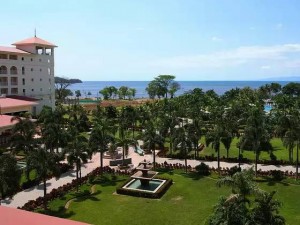
RIU Guanacaste
Author’s Note: The article herein is based on news reports that have appeared in El Pais, a publication that takes a very firm stance on environmental issues in Costa Rica.
The advent of the Information Age has produced some very interesting practices related to media jamming and manipulation. The lexical terms that develop to match these practices tend to be colorful as well. Astroturfing, for example, refers to political or ideological support given to an organization in order to make it appear as a grassroots entity -imagine a company like Microsoft claiming these days that its software is written by high school students saving up to go to the university.
Greenwashing is similar to astroturfing; it is defined by Wikipedia as:
a form of spin in which green PR or green marketing is deceptively used to promote the perception that an organization’s aims and policies are environmentally friendly.
A legislator from the Accion Ciudadana (Civil Action) opposition party has joined a group of environmentalists in a series of complaints dealing with greenwashing in Costa Rica at a very high level. Among the targets of the complaints are an extreme tourism provider and a luxury resort.
Bungees del Tropico
A bungee jump outfit that operates on a high bridge connecting the Grecia and Naranjo cantons in the Alajuela province. According to legislator Claudio Monge Pereira, the bungee jump provider engaged in quite a bit of palm greasing to essentially take over a bridge that once served as a gateway to the Pacific zone.
Mr. Monge insists that the bridge in question is in the process of being entered in the historic registry and should be used to alleviate traffic instead of bungee jumping. The greenwashing accusation is based upon the company’s claims of bungee jumping being an eco-friendly activity, and the legislator’s claims that it does not pay taxes or contribute to the community -an integral part of the environment.
Hotel RIU in Carrillo, Guanacaste
The greenwashing accusations leveled at this hotel, part of a chain of luxury resorts owned by a powerful family from Spain, are pretty serious. The online publication El Pais has reported on this issue extensively, and its reports indicate a complex greenwashing scheme undertaken by the luxury hotel chain over the years. The company, RIU Hotels, has more than 100 luxurious resorts in some of the most popular international tourist hotspots, such as Aruba, the Bahamas, the Canary Islands, Cape Verde, Spain, and more.
The public relations department of RIU Hotels has issued several press releases over the years about the chain’s green purchasing policies, its water and energy-saving programs, its measures to avoid wasting of paper and other resources, and more. These efforts have been characterized as greenwashing by El Pais, Mr. Monge and Confraternidad Guanacasteca -a local environmental protection network of activists.
The allegations of greenwashing are centered on RIU’s development in Guanacaste. The claims are that RIU Hotels have removed entire sections of forest, diverted a creek, and buried a section of mangrove under dirt and ornamental grass and bushes. Administrators from RIU Hotels deny the accusations, but environmental groups claim to have photographic evidence.
Modern greenwashing often involves manipulation of Wikipedia, and the battle between RIU Hotels and its accusers has unfolded there as well. If you visited the Spanish Wikipedia entry for RIU Hotels on April 27, 2012, you may have seen the following cryptic message:
“This line was edited by ECKL 08-04-2012 to make a point for legislator Claudio Monge and El Pais. The rest of the content is in its original form.”
Should greenwashers or RIU Hotels sympathizers attempt to change the allegations contained in the Wikipedia page therein, the line above will serve as proof of the attempt to deceive.



