


 SIGN UP FOR OUR
 The disappearance of these fish would affect Costa Rica’s US$599 million per year sport fishing industry, say experts.


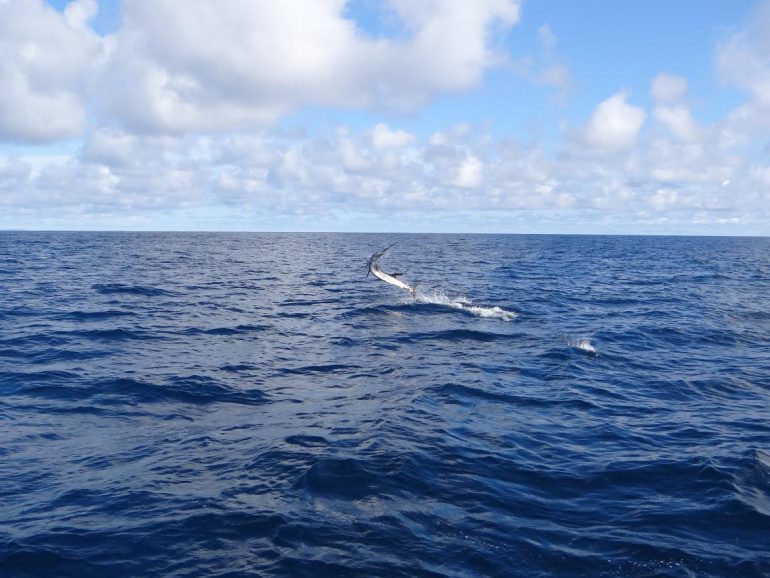

The Costa Rican Fisheries Federation (FECOP, its initials in Spanish) called for protecting marlin and sailfish from commercialization based on recent studies that show the large economic benefits reaped from maintaining healthy sea populations of these fish.
“The data shows the enormous value of a marlin or sailfish at sea … for the Costa Rican market. The economic value of these species for commercial fishing is very low compared to its value for sport fishing, and therefore at FECOP, we defend their protection for the importance and impact they have for this activity,” said Carlos Salas, executive director of the fisheries federation.
Marlin and sailfish don’t scale up as fish marketed for consumption compared to alternatives such as yellowfin tuna. And, from a nutritional point of view, they have fewer nutritional benefits for humans than other options like salmon, trout and sardines, said FECOP.
In addition, the contribution of tourist sport fishing activities to Costa Rica’s gross domestic product (2.3 percent) is higher than that of commercial fishing, which generates 1.8 percent of the national GDP. Sport fishing also generates many more jobs, and from an economic standpoint, there is a clear justification for the conservation of these species.
“FECOP’s position advocates the non-commercialization of marlin and sailfish in favor of their availability for sport fishing, and stresses the need to establish management measures that promote their conservation, and sustainable and equitable use of these marine resources,” continued Salas.
These two fish are the most sought after for sports fishing enthusiasts, and their disappearance would negatively affect the industry’s some US$599 million in earnings, said FECOP.
A 2009 study by Institute for Economic Sciences Research at the University of Costa Rica (IICE-UCR) and The Billfish Foundation (TBF) identified sport fishing as one of the main activities carried out by over one-fifth of tourists surveyed at the country’s two international airports.
Another study by the Marina and Dock Commission (CIMAT) at Costa Rica’s Tourism Institute estimated that over 122,000 tourists in 2011 engaged in sport or recreational fishing during their stay in Costa Rica.



