


 SIGN UP FOR OUR
The U.S. State Department’s annual International Narcotics Control Strategy Report came out this month. In the Money Laundering and Financial Crimes section, the report’s second volume, Costa Rica is noted as being a favorable base for, “transnational criminal organizations to commit financial crimes due to its location and limited enforcement capability.”
The report acknowledges that despite the Costa Rican government’s attempts to strengthen legal mechanisms for supervision and enforcement, “challenges remain in mitigating money laundering risks.”
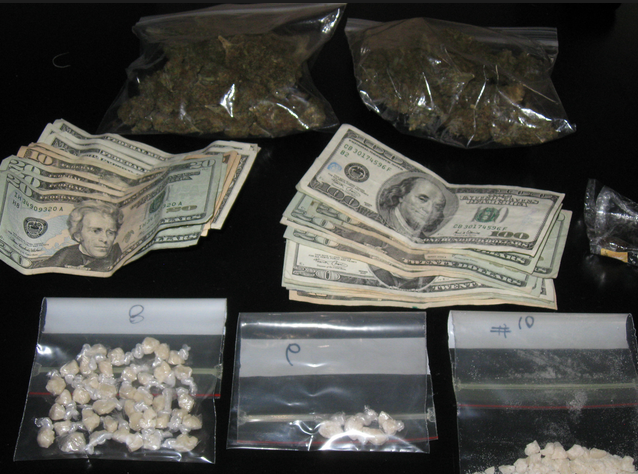
Drug trafficking profits are the largest source of laundered assets in Costa Rica, says the report, followed by revenue obtained from other illegal activities such as human trafficking, financial fraud, corruption, and contraband smuggling.
Particularly vulnerable to exploitation by money launderers are the construction industry; money or value transfer services, including money remitters; the casino industry; and real estate; as well as public and private financial institutions.
The study also noted that because online gaming is legal in Costa Rica, there are allegations of it being used to launder millions of dollars.
As far as advances made to detect and punish money laundering, the State Department noted that, “Authorities have occasionally detected trade-based money laundering schemes and continue to identify bulk cash smuggling by foreign nationals.” But notes with concern that due to Costa Rica being a transit point for illegal drug smuggling, there is significant laundering of proceeds from this lucrative illicit trade.
One particular loophole in Costa Rica is in the way companies, or sociedades anónimas (SA), are able to escape criminal responsibility, and are only liable under civil law, said the report. In addition, there has been until very recently a lack of transparency regarding beneficiaries and owners of registered companies, and inadequate mechanisms for sanctioning illegal behavior by companies.
A law passed the Costa Rican legislature in December 2016 (bill 19.245) requiring companies to disclose all company partners, board members and beneficiaries attempts to close this potential loophole. And in May 2016, a bill (19.951) was introduced to extend regulatory supervision to credit card operators, money transfer business, casinos, and real estate developers and agents, said the report.
The State Department called on Costa Rica to continue to close legal gaps related to financial crimes, and allocate resources for investigation and prosecution, noting, “Prosecutors face challenges in prosecuting stand-alone money laundering cases because they are obligated to obtain convictions for predicate offenses first. Additionally, personnel shortages frequently hinder investigations.”
Costa Rica cooperates well with U.S. law enforcement, said U.S. officials, and is involved with ongoing investigations on U.S. financial crimes linked with Costa Rican.
For example, in 2016, “U.S. investigators dismantled a billion-dollar online gaming ring with Costa Rica-based employees. In May 2016, the U.S. Department of Justice cooperated with Costa Rica’s Judicial Investigation Organization in the conviction of the Liberty Reserve founder for money laundering,” reads the report.
Also last year,
“Costa Rican investigators advanced complex cases and seized larger businesses, including two car washes and a hotel. During the period January 1 – October 1, 2016, the special bureau for money laundering in San José brought four cases to trial and achieved convictions or guilty pleas in three cases. In addition, regional prosecutors brought 23 cases during the period January 1-November 1, 2016, of which 13 resulted in convictions or guilty pleas.”
As Costa Rica continues to improve its enforcement and regulatory framework to remedy the deficiencies highlighted by international experts, a decrease in money laundering activities and an increase in their prosecution should begin to be seen.



