


 SIGN UP FOR OUR
 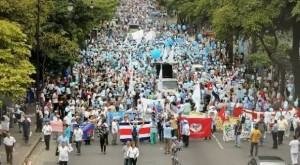 Many people in Costa Rica will not report to work today in observance of May Day. Government institutions and many commercial establishments will take the day off as well. For labor unions and legislators at the National Assembly, however, today will be a busy day.
Elections at the National Assembly in Costa Rica are purely political. They do not involve the vote of the citizenry, only of the legislators. Today’s election is crucial because it will mark the return of the National Liberation (PLN in Spanish) party as the political movement with the most clout and power. President Laura Chinchilla was elected to power on the PLN platform, and this is also the party of former two-term President and Nobel Peace Laureate Oscar Arias Sanchez.
The PLN, which is often compared to Mexico’s long-running political powerhouse PRI, was challenged earlier in the present administration by an alliance between different movements that aimed to trim away power from the legislative Goliath. That alliance worked in the beginning, and many of the failed and stalled legislative projects that the Executive Branch supported and the PLN promoted are evidence of the coalition work.
After a few months, it became a jagged alliance, and Ticos wondered if it had ever been a good idea to begin with. It was Costa Rica’s attempt at a two-party system -similar to the United States- and it did not work. The ideology and differences between individual legislators could not sustain the alliance, and the PLN was essentially unmoved. The alliance eventually collapsed.
According to digital newspaper Informa-Tico, PLN legislator Victor Emilio Granados could be the new president of the National Assembly. The PLN is not facing the opposing alliance alone: it now counts with the support of PASE, a political party that is the advocate of Ticos who live with disabilities, as well as a few legislators who enjoy significant Protestant constituencies. The PLN voter base is largely Roman Catholic, and thus the support from prominent Protestant legislators reveals a religious counter-alliance in the National Assembly.
While last-minute campaigning and horse-trading take place at the National Assembly, labor unions just outside of the historical building will be voicing their discontent with the legislators of the alliance, the PLN, independents, the Executive, et al. Several streets in the city of San Jose have been blocked for this purpose, and the unions are very upset at the fact that the alliance could not keep it together. They are also upset at the instances of corruption found in the National Assembly and the government, especially since such acts did not come to light until before the elections. The workers also claim that the politicking has become excessive, to the point that the interests of the massive labor unions are being ignored.
We will have to wait until next year to see a greater focus on the labor unions. In 2013, Costa Rica will celebrate 100 years of labor union protests on May Day.



