


 SIGN UP FOR OUR
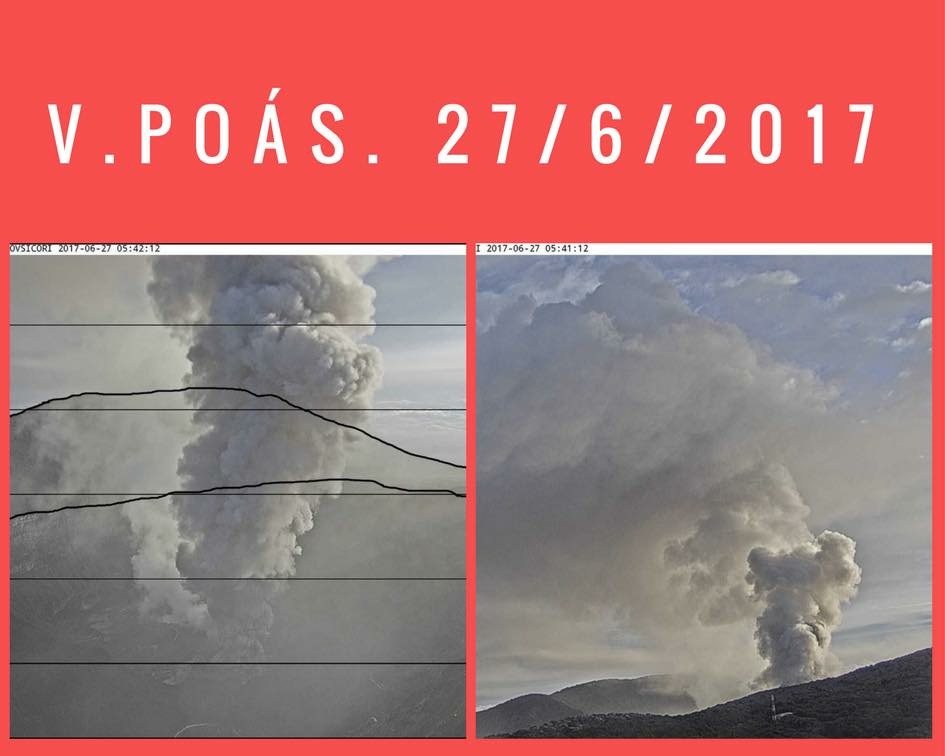
Businesses in the former agricultural towns near the frequently touristed volcano by the same name in Poás, Alajuela are reporting up to 70 percent decreases in sales over recent weeks since the volcano entered a new, eruptive phase.
Tourism has become a mainstay of this national park and surrounding area due to its proximity to the main international airport and to San José – making it a popular one-day trip for foreigners and locals alike. This has led to a burgeoning of mom-and-pop shops, eateries and lodgings that have become central to the area’s economy.
Data gathered in the study estimates local economic losses of about 7.1 billion colones total, or about 592 million colones per month.
This was one of the results released this week of a study by the Universidad Latina de Costa Rica, which also documented fewer visitors since the volcano’s national park was closed over two months ago.
The eruptions have been ongoing, most of them comprising of gas, ash and particles, but some which have heaved molten rocks into the surrounding forests, and some which have caused variations in local river temperatures and flows.
The economic losses are particularly troubling because most tourist-related businesses have steep debts that can take up almost half of their assets, so the declining income is making it difficult for people to keep up with their loan payments, therefore risking losing their investments.
“This not only creates an economic and financial problem in the area, but also a social one, as the closure of these businesses would generate a serious problem of unemployment,” explained Sindy Chaves, research director at the Universidad Latina.
The average age of entrepreneurs interviewed was 46, with an average family size of four. The business owners in the study sample averaged 33 years living in the area and about 12 years running a their business.
In addition to the direct economic losses experienced by the drop in visitors, suppliers are being indirectly affected due to Poás businesses reducing their purchases, said Chaves.
“We are talking that annually these businesses purchase about 390 million colones from businesses of outside the zone, mainly in Alajuela. In addition to this, banks could lose up to 1.04 billion colones if businesses in the area close their doors,” said Chaves.
The study results strongly suggest that, “if access to the park is disabled for a period of several more months, the cash flows of many of the businesses would be endangered, especially for the food and souvenir businesses, which are the majority, which would bring about closures or reduced personnel – a situation that is already happening in the area,” said Chaves.
Only 16 percent of the businesses interviewed said they could last under the current circumstances for two or more months, the rest said that within a month they would be in dire straits.
“In other words before the end of the year many of these companies could go bankrupt,” cited the study results.
This study was developed out of a similar investigation conducted in 2006, by Dr. Juan Aguirre, professor at the Universidad Latina of Costa Rica, after a series of eruptions forced this same national park to close for three weeks.
The new research conducted by the Universidad Latina began in the second week of May, 2017, and the data collection and analysis process lasted a month. Data collection was done by surveying businesses in the Fraijanes, Poás and Poasito areas. A sample of 21 businesses out of a total of 38 were surveyed.



