


 SIGN UP FOR OUR


A mega rail and road cargo transportation project that would completely bisect Costa Rica east-west through its northern region seems to have the makings of a future conservationist versus businessman standoff.
The details of the project’s location have been kept nebulous, while those in the shipping, trade and transport sectors tout the economic benefits of a future rapid interoceanic system that could rival the PanamaCanal. The project is still in its early design phases.
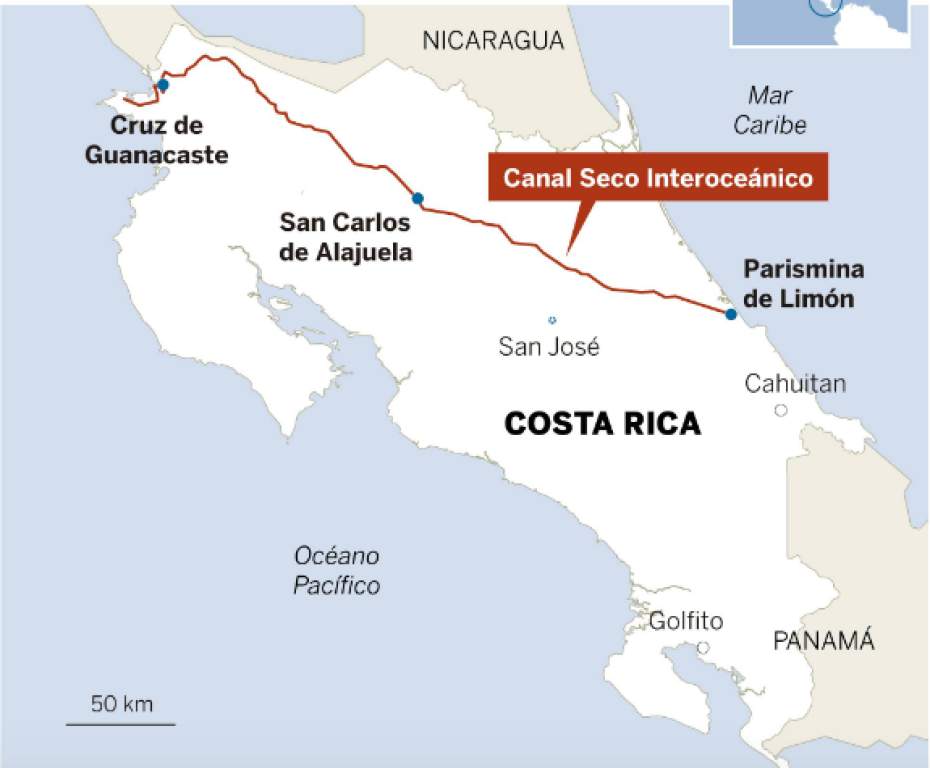
With the proposed route leading from the Atlantic Limón port north-westerly towards La Cruz, near the Nicaraguan border, one can’t help wonder how builders would be able to mitigate environmental damages given the proximity of the massive 10-lane planned highway to wetlands, protected areas, and forests.
You don’t need to be a scientist to wonder how a jaguar or puma would cross 3 rail lanes and 10 highway lanes.
Last November, when a formal proposal was put forth by private companies in conjunction with Costa Rica’s port, railway and transportation authorities, four companies were interested in taking on the mammoth coast-coast 315 km “dry canal” – a high speed, integrated, overland cargo transportation route, according to the Costa Rican Transportation and Public Works Ministry.
The Costa Rican National Concessions Commission (CNC) announced this week they have chosen two companies to develop two projects for the US$16 million infrastructure: Americas Gateway Development Corporation Ltda (AMEGA) and Canal Seco de Costa Rica (CANSEC), according to a report in Central America’s Summa business magazine.
Carlos Dengo, representative of AMEGA Costa Rica, explained to EFE, the Spanish News Service, that “We asked the Costa Rican Government in 2007 for the dry canal project and he told us that since it was a megaproject, it would have to be carried out in stages.”
The first stage is already approved, and the company is working on the final design for the Atlantic Container Transshipment Terminal at the Moín, Limón port .
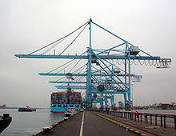
This port, located in Moín, province of Limón (Caribbean), will cost more than one billion dollars, will be spread over 70 hectares, will have at least 10 gantry – or ship-to-shore – cranes, one thousand meters of berths with 19 meters of depth, and a 2.5 km-long access channel .
“At the moment, we are in a 12-month design stage of the terminal that we have to conclude in June next year to present to the CNC for public bidding,” explained Dengo.
The project is presented as a private initiative mechanism for the concession of public works.
“We are now in the stage of designing the transhipment terminal, and initiating feasibility studies for the planned rail component and Pacific transfer port,” he continued.
Dengo said the dry canal’s can compete with the Panama Canal to offer a more attractive service that is quicker, possibly less expensive, and that can accommodate larger ships that may be too big in the future for the existing infrastructure in Panama.
The demand for the services of such a dry canal will grow in a few more years, according to AMEGA’s market studies.
The second phase of the project, to carried out by CANSEC, which recently presented and discussed its construction plan, would consist of three rail lines (one emergency) and a 10-lane highway linking the ports to be built in Parismina (Limon) and Santa Elena (Guanacaste, North Pacific).
Construction of the canal would create 80,000 jobs, facilitate cargo transfers through Costa Rica from coast to coast in 3 hours, include free trade zones, and have its own bank and service areas, said the report in Summa.
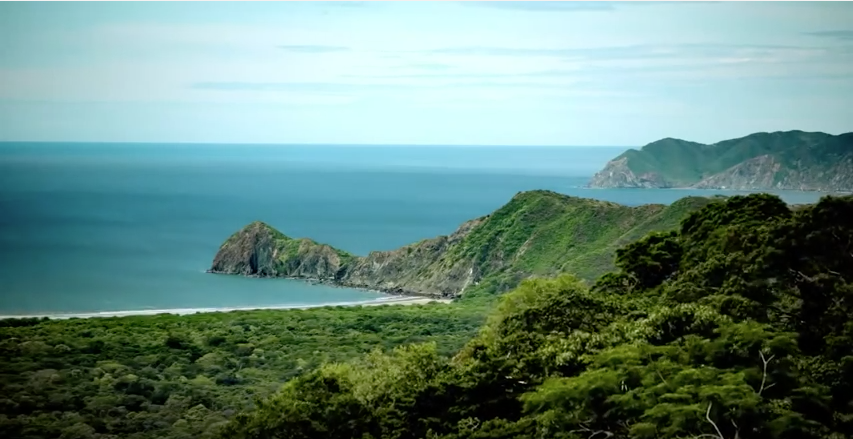
One controversial aspect of the project is its ending point in La Cruz, Guanacaste, adjacent to the areas of Cuajiniquil and the Santa Elena bay located inside the Santa Rosa National Park – a protected wildlife and historic area.
The exact proposed route is being kept secret to avoid “false speculation,” said CANSEC executive president , Lucia D’Ambrosio, “although it has been studied and will not touch any nature reserve.”
Mauricio Álvarez, president of the Conservation Federation of Costa Rica (FECON), spoke to EFE saying the dry canal project,
“So far is a fiction that seems more of a socio-environmental nightmare. There are no studies or information available, only speculation of routes, impacts and much propaganda of supposed benefits. What we can say,” he added, “is that it involves dividing the country in two, with all the socio-environmental implications that derive from something of that magnitude.”



