


 SIGN UP FOR OUR


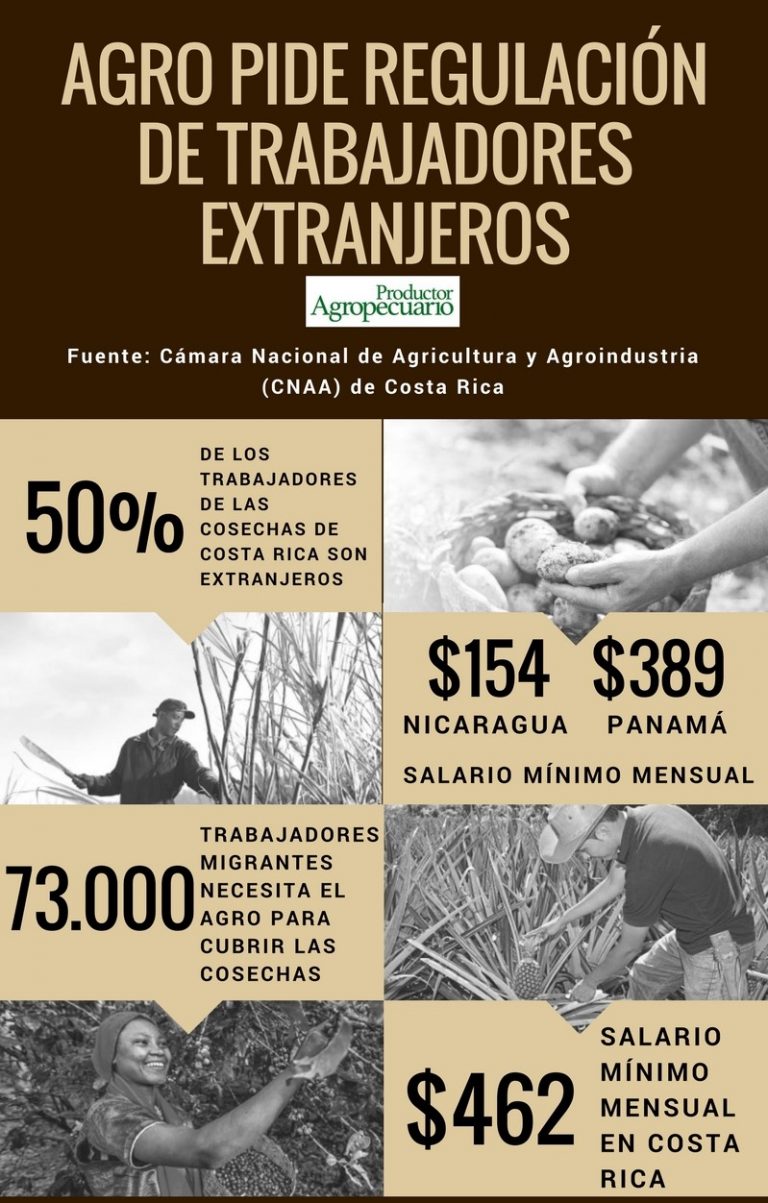
Farmers in Costa Rica are clamoring for changes in immigration policies in order to facilitate contracting field hands from Nicaragua and Panama, said a report in Costa Rica’s agricultural industry’s magazine, ProAgro.
The Costa Rican National Chamber of Agriculture and Agroindustry (CNAA) says that current legislation does not coincide with the reality of the agricultural, aquaculture, and agribusiness sectors, and hampers their ability to contract much-needed migrant labor.
The Ministry of Agriculture and Livestock estimates that 50 percent of the country’s agricultural workers are foreigners, mainly from Nicaragua and Panama. Some 73,000 migrant workers are hired each year to harvest crops such as melon, pineapple, orange, sugar cane, and coffee. For the coffee harvest alone, 37 – 40,000 migrant workers are required throughout the country.
Because farmworkers are hired seasonally, said the chamber, there are different considerations involved,
“These are workers hired only at harvest times. Therefore, you can not consider them permanent employees or a set part of the country’s labor activity, as some government officials claim,” said Juan Rafael Lizano, president of the CNAA.
Lizano reflected that there are foreigners already in the country who would be a ready source of labor for the agricultural sector, but many entered the country without proper documents and existing immigration policies don’t allow the flexibility needed for them to obtain a permit for farm work.
The CNAA is petitioning the government to create an exemption that would allow agricultural producers to obtain paperwork for migrants in the country who wish to work on harvests and fill temporary positions.
“For us, migrant laborers are of the utmost importance. That is why we need the state to help us solve this problem, because without migrant workers we could face stoppages in production and loss of harvests,” Lizano concluded.



