


 SIGN UP FOR OUR


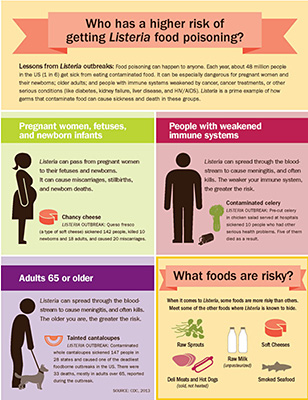


Listeria may not be part of your daily lexicon, but if you’ve ever been pregnant it probably was once on your radar.
The bacteria can be spread by contaminated food, and can cause a rare infection that can be deadly in 20-30 percent of infections. Pregnant women are 10 times more likely than other people to get a Listeria infection, according to the United States Centers for Disease Control.
Costa Rican Javier Pizarro was recently awarded a prestigious international prize for his work on listeriosis, the infection caused by that nasty bacteria.
This week Pizarro Cerdá will receive the Georges, Jacques and Elías Canetti prize, announced the Pasteur Institute, where the researcher has been working since 1999.
The 10,000-Euro award (US$11,879) is for Pizarro’s notable work on the molecular mechanisms used by the bacterium Listeria monocytogenes, Pasteur said in a statement.
Pizarro and his colleagues recently discovered an antibiotic secreted by the pathogen that removes the protective bacteria present in humans’ intestinal flora, which facilitates the development of listeriosis.
Their finding contributes towards the implementation of new antibacterial therapies that may reduce fatality associated with the infection, said the Spanish news agency EFE.
The foodborne disease causes septicemia or central nervous system infection, and is particularly serious when it affects a pregnant woman, as it can lead to miscarriage, premature labor or a serious neonatal infection. Listeria can be found in some soft or unpasteurized cheeses, cured meats, as well as some raw vegetables and fruits including alfalfa sprouts and cantaloupe.
To prevent infection, individuals – especially pregnant women and immune compromised individuals – are warned to avoid cheeses made from unpasteurized milk, raw alfalfa or other bean sprouts, and to take care with cold cuts, pates, and raw fruits or vegetables that may have been sitting out for long periods.
Pizarro, a native of San José, Costa Rica, where he studied biology, was awarded a scholarship by the French embassy in 1994 to continue his research in France. Since joining the Pasteur Institute, he has specialized in the pathogen listeria. He is research director of the Pasteur Institute’s Department of Cell Biology and Infections, said EFE.
The Georges, Jacques and Elías Canetti Prize was created in 2006. Elias was a Nobel Prize for Literature in 1981, Jacques was a music promoter, and Georges, a researcher at the Pasteur Institute, dedicated his life to the study of tuberculosis, and was one of the pioneers of combination treatments that use several antibiotics, according to the Pasteur Institute.



