


 SIGN UP FOR OUR

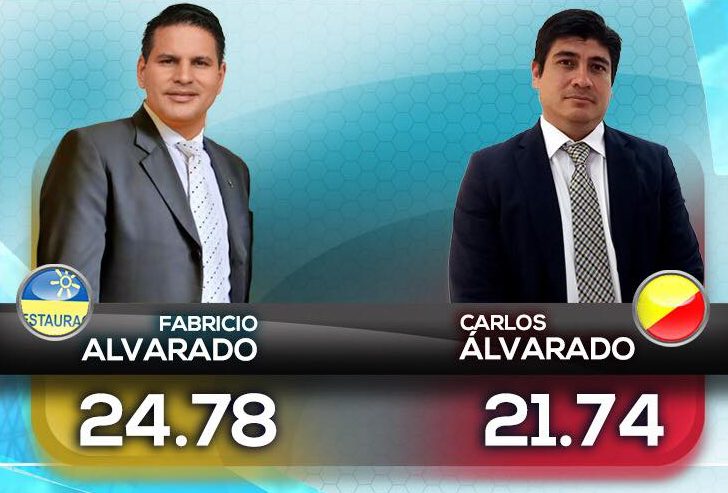
A large sector of the Costa Rican population couldn’t hide their disbelief when the first results of the presidential elections were announced.
Fabricio Alvarado, the candidate for the National Restoration Party (PRN), an Evangelical Christian, preacher and singer, a pre-grad journalist and current deputy in the Legislative Assembly was proving the polls right.
In second place, Carlos Alvarado, the candidate for the Citizen’s Action Party (PAC), a writer, journalist and politician who holds two degrees, one in communication and a masters degree in political science, was also a surprise, since he is the candidate for the Party currently in office, which has been strongly criticized in the past few months in particular for the involvement of many of its members with the Cementazo corruption scandal case.
This was certainly an unlikely scenario, despite the fact that the last polls showed Fabricio as the favorite and Alvarez Desanti from the Liberation Party in second place, it seemed unlikely that the PRN candidate would get enough support considering his inexperience, lack of academic achievements and lack of an experienced team behind him. In fact, Fabricio had the support of just a 3% of the population back in December. So, What Happened?!
The sudden support received by Fabricio Alvarado is attributed to the recent ruling by the Inter-American Court of Human Rights regarding same-sex marriage and transgender rights, which states that the rights of same-sex couples should be recognized and guaranteed and that the transgender population must have the right to change their name and gender in their official documents. Fabricio was the only candidate that stated loud and clear his opposition to this ruling, since, according to him, it endangers the values of the society and the “traditional family”; he also went as far as saying, assuring and repeating that in the event of winning the Presidency he would take Costa Rica out of the Inter-American Court of Human Rights.
His radical position gained him many supporters. A video of his wife speaking “tongues” and calling herself a “prophet” went viral, Fabricio and his wife were the victims of many jokes and attacks, but apparently this didn’t discourage his followers.
The questions and disappointment was expressed by many in social media, are we living in a Costa Rica that is so conservative that is not ready to accept and recognize the rights of minorities like the LGBTI population?
And, why was this topic more important than the country´s fiscal deficit, possible financial crisis, political corruption, infrastructure and other urgent matters that will affect the lives of all the Costa Rican population?
Possible reasons:
Education/Religion/Intolerance: It seems that religion took a prevalent role over education for many. What does it really mean for same-sex couples to be able to marry? It has nothing to do with religion and everything to do with equal rights, yet it seems that the society in Costa Rica is not ready to accept that other groups should be able to live their lives anyway they choose to, as long as it doesn´t affect the rights of others.
Wasted Opportunities to Provide Real Information to Voters: For reasons that many don’t understand, Fabricio was not questioned enough during the debates, interviews, etc. regarding his government plan which is deficient in many areas, the fact that he doesn’t have a solid team behind him, and the “know how” to make things better for the country. Instead, he was asked a million times over his position over same-sex marriage and gender identity, why he had switched from the Catholic church to the Evangelic church, and even if, in the event he won the presidency, he would get rid of the country’s patron saint, the Vírgen de los Angeles or “La Negrita” as Costa Ricans refer to her. (Yes, that was a question in a debate, sadly). We can’t help but wonder, if the results would have been different if he would have been asked , more relevant and technical matters, about his achievements as a Congressman, for example, and his plans as a president.
Just the opposite can be said about Carlos Alvarado, he was attacked left and right regarding the faults of the current administration, and Carlos was able to dodge the bullets and even show off his knowledge on different topics, and his ability to stay calm and in control while also admitting of the mistakes made and highlighting the positive, he stood out, by not giving excuses, he is younger than the rest of the candidates (which can be either good or bad) and has an open mind about many different topics. Yes, he is adamant about the need to switch to an IVA tax and go from 13%-15%, the tax will not affect private education or private health services. Will he have what it takes to bring stability to the country´s finances? Is his team good enough?
Corruption/More of the Same: The two parties that had been the strongest in the past, the National Liberation Party (PLN) and the Social Christian Unity Party, were both left out of a second round, it seems that the population perceives them as ¨More of the same¨ and the fact that some of their members have been linked with different corruption scandals doesn´t help.
Abstentionism: Costa Rica is a privileged country, one where every citizen has the right to vote freely and in secret. There was a total of 13 candidates to choose from, over 6,000 voting tables in the country and 52 abroad. Yet, abstention reached almost 34%, another reason to be disappointed. It is a shame that such a large number of ¨ticos¨ do not value their democracy and the opportunity given to pick their President.
Fabricio and Carlos have one thing in common,(besides their last name), they both have their way with words, hence their journalism studies, but their positions on almost every topic are very different from one another. Costa Ricans will have to choose between them on a second round of elections that will be held the first Sunday of April (April Fools day) and once again the question remains, will Ticos pick their candidate based on their team, preparation, achievements and government plan or will their position in favor or against same sex marriage be the defining factor?
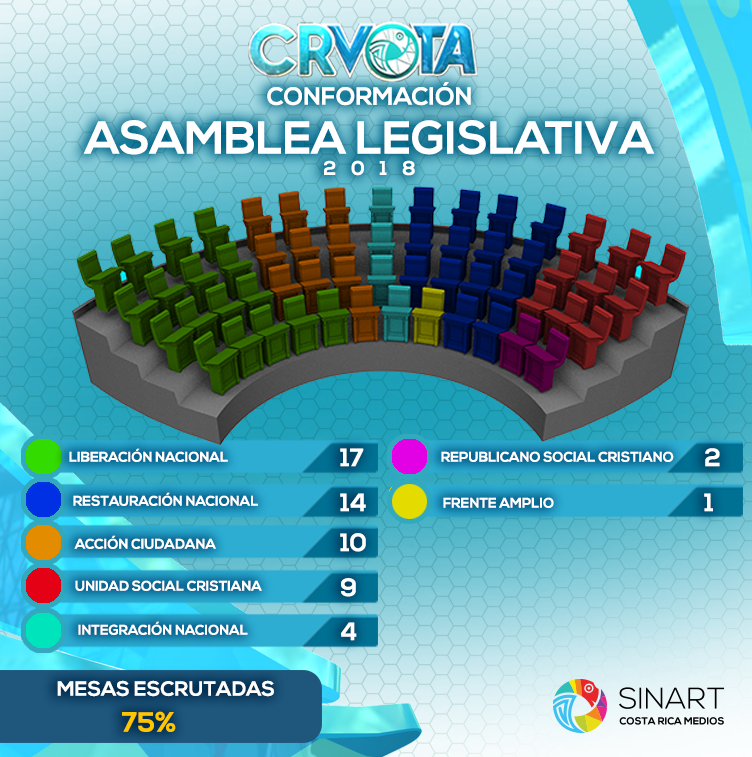
Whoever the next president of Costa Rica is will also be faced with a divided Legislative Assembly with representatives from 7 different parties, Fabricio´s party actually managed to position 14 deputies while PAC got only 10.



