


 SIGN UP FOR OUR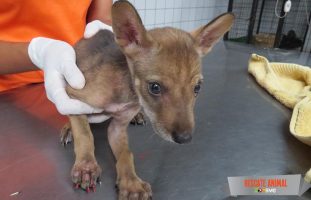
Source: Zoo Ave
Field officers from the Ministry of the Environment (Spanish initials: MINAE) rescued a pair of baby coyotes that were found separated from their mother and pack in Guacimo, a farming community in the Caribbean region of Limon.
The two cubs were transported to the Zoo Ave Wildlife Rescue Center in La Garita, province of Alajuela. According to a news report filed by Alejandro Fonseca of daily tabloid Diario Extra, the little coyotes are both males born about 9 to 12 weeks ago.
Wildlife expert Aleyda Mendez Fernandez of Zoo Ave spoke to Mr. Fonseca about the general health of the cubs:
“These tiny coyotes were brought by MINAE officers. We think their mother may have been killed since the two cubs were all by themselves in the forest; the officers looked around for a pack or a lone coyote mother but they are difficult to locate. Upon being admitted, we conducted health assessments; we thought one was afflicted with a fungal infection, but that was not the case.”
The coyotes have been treated for intestinal parasites and are being fed with a special formula for wild canines. They currently weigh one kilogram, which is almost the ideal weight at their young age.
Farmers in Guacimo and other rural areas of Costa Rica sometimes set up traps to protect their poultry and livestock from coyote attacks. MINAE officers patrol farms to look for traps that are deadly or insufficiently humane to avoid situations such as the orphaned coyotes mentioned above. Farmers are only allowed to kill coyotes that are actively preying on their farm animals; hunting for reasons other than subsistence is illegal in Costa Rica.
The wildlife rescue experts at Zoo Ave believe that the coyote cubs should be completely healthy and rehabilitated in about four months. The experts are coming up with a plan to allow the coyotes to roam large, fenced areas of their private forest and limit human contact. The idea is to allow the cubs to develop their hiding and stalking instincts before being reintroduced to their habitat.



