


 SIGN UP FOR OUR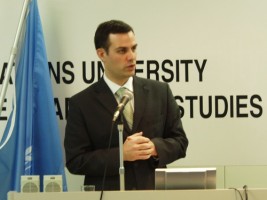
Source: United Nations University
Alvaro Cedeno Molinari is the Ambassador of Costa Rica in Japan. He keeps a blog about Conflict Transformation, in which he discusses various topics centered on peaceful conflict resolution. He recently published a series of opinions calling for a strategy to rescue values he believes have been lost in Costa Rica. According to the Ambassador, our country faces a critical loss of values, and he offers a proposal to rescue them. Here are some excerpts from his message:
The Loss of Cultural Values
The values that have made Costa Rica a progressive nation are in real crisis. The values are familiar to all Ticos: free and compulsory public education, free health care, lack of a standing army, environmental conservation, a penchant for sustainable development, protection of biodiversity, etc.
Mr. Cedeno cites three causes for the erosion of values in Costa Rica:
- The sudden impact of globalization in the areas of commerce and information.
- A culture of consumption that breeds inequality and tends to ignore those who live in poverty.
- A loss of trust in religious institutions, which in the past played a significant role in the communities they served.
He offers three grave consequences of the loss as well:
- The ethical basis of behavior and conduct is being lost in all sectors, from public to private and from commercial to academic.
- A priority has been assigned to income generation and monetizing of all affairs.
- Time and effort are now allocated to income generation and entertainment, instead of focusing on community service and civic affairs
The concepts above form part of what Mr. Cedeno offers as a diagnostic of the problem. He then moves on to the symptoms:
Violence: Just 25 years ago, Costa Rica had a murder rate similar to that in Switzerland. Over the last two decades, that rate has grown by about 10 to 15 percent.
High-level Corruption: Mr. Cedeno argues that transparency has been lost, although the resignations and firings of cabinet members in the current administration would suggest that transparency is exposing corruption. Lack of qualification to serve, as well as infiltration of powerful interests in government are two of the problems cited in this regard.
Individualism: Indifference and a mentality of “everyone for themselves” are the new mottoes Ticos live by. This is loosely related to the self-reported happiness touted by international surveys.
Accountability: A culture of blame has developed, whereupon witch-hunts and revelations by the press and social media have become more important than solutions to the problems exposed.
In the end, Mr. Cedeno offers the following proposals to ameliorate the situation, which should fall upon our political leaders:
- Do not fall into isolationism, particularly at a regional level. Herein the Ambassador posits that Costa Rica should find the right allies in terms of security and prevention of violence by drug cartels.
- Continue with our conservation and sustainability policies, but offering more of our expertise in these matters to the international community.
- Identify the spiritual practices that actually promote values and support them accordingly.
- Promote healthy practices and disease prevention on a personal and family level.
- Institutionalize the teaching of peace in public education. Our country has made great strides in promoting peace on the international stage, but our young people should also be well-versed in this vital subject.
- Promote harmony between all sectors of society. Discussion is part of the democratic process, but bickering is not.
- Make a plan to regain values in the 21st century. Here is where online social networks can be utilized to great effect. Social media can be utilized to find out the values Ticos would like to live with, and which we are willing to recover.



