


 SIGN UP FOR OUR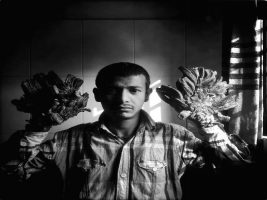
Wikimedia Commons
By Igor G. Barbero for EFE
He may not be able to close his fists perfectly yet, owing to a layer of warts that are still on his palms, but the “Tree Man” of Bangladesh is pleased with his new hands after a string of surgeries freed them of the burden of warts that resembled the bark of a tree.
Now awaiting cosmetic touch-ups, 27-year-old Abul Bajandar, is thinking about leading a normal life soon.
“I feel great, I still can’t walk because of the recent surgery and I have to exercise my hands daily to improve their movement, but to have them free feels wonderful,” he told EFE from his ward at the Dhaka Medical College Hospital, where he has been admitted since January.
Hailing from the southern Khulna province, the plight of this young man, suffering from a rare condition called epidermodysplasia verruciformis, which led to heavy tree bark-like scaly warts on his hands and feet, made news worldwide in early 2016.
“Slowly, I am beginning to recall how I felt before my hands and feet began filling up with warts at 15. I have suffered so much. People would avoid me, and I was always in pain. I missed everything – from eating by myself to playing with my daughter and embracing her – things every father longs to do,” he said.
After nearly a dozen surgeries on his limbs, Bajandar will undergo five more cosmetic procedures that will keep him in the hospital for at least “six more months,” according to his doctors.
This extremely rare but non-contagious malady has no known cure, and the hospital is collaborating with U.S. doctors – who have received DNA samples of Abul and several of his family members – to study if the warts can be prevented from resurfacing.
“As of now there has been no recurrence and his condition is improving. But we don’t know what the future holds,” Dr Samanta Lal Sen, director of the hospital’s Plastic Surgery and Burns Unit, told EFE.
“It was a very new operation for us. It was very difficult to know where the fingers and the blood vessels were, and there was a great risk of complications…We have shown that if we try, we can do a great job here in Bangladesh,” the doctor added with pride.
Bajandar too is all praise for the medical team and is optimistic his hands will be completely healed.
Following extensive media coverage of the case, the Bangladeshi government had decided to bear the expenses of the expensive treatment, and while Bajandar is thankful for all the financial help coming his way, he says he wants to set up as a rice trader – although before the disease struck and reduced him to begging on the streets, he had earned his living pulling a goods van – when he is out of the hospital.
Bajandar and his wife Halima, both dream of educating their daughter to become a doctor and cure poor and needy people with similar diseases.
And at the end of what was a long and tortuous journey that tested their patience, and depleted their earnings as they ran from pillar to post seeking help, whether local homeopaths or doctors in the Indian city of Calcutta, the couple can finally relax now.
“Now, I just feel happy. We are finally seeing the light,” Halima says with a sigh of relief. EFE
Dhaka, Aug 26 (EFE)



