


 SIGN UP FOR OUR
 By Wendy Anders
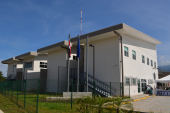
Barva, a small coffee-growing town north of Heredia, inaugurated a spacious new clinic last week.
The Costa Rican Social Security Board (CCSS), the country’s public health services agency, said at the opening that the new facility expands their capacity to meet with health needs of Barva’s 42,464 residents.
Outfitted with previously unavailable services such as a clinical and microbiology laboratory and odontology services, the new clinic has more space for doctors’ offices, pharmacy, emergency services, social work, and storage for medicines and equipment, and will be open until 10 p.m., stated María del Rocío Sáenz, CCSS executive president.
The new, handicapped accessible facility will also have a larger staff which is increasing from 175 to 200 people. The new staff includes an occupational medicine doctor designated for patients who require work disability permits. Local residents will no longer need to travel to larger clinics or hospitals to apply for a work disability permit.
The new Barva clinic will also have its own on-site microbiologist for carrying out laboratory work.
The clinic’s services are administered by the Cooperativa Autogestionaria de Servicios Integrales de Salud de Barva R.L. (Coopesiba) which has provided services to Barva and also San Pablo de Heredia residents for the CCSS since 1998.
Last year, the CCSS listed Coopesiba among the top ten public health service providers in the country.
Costa Rica is divided into 104 health areas, all of which provide residents access to a basic set of primary health care services, said the CCSS.
Services in 13 of these health areas are administered by third parties through special agreements with the CCSS. These 13 health areas are located in different parts of the country and provide services for 650,000 people, said the CCSS.



