


 SIGN UP FOR OUR
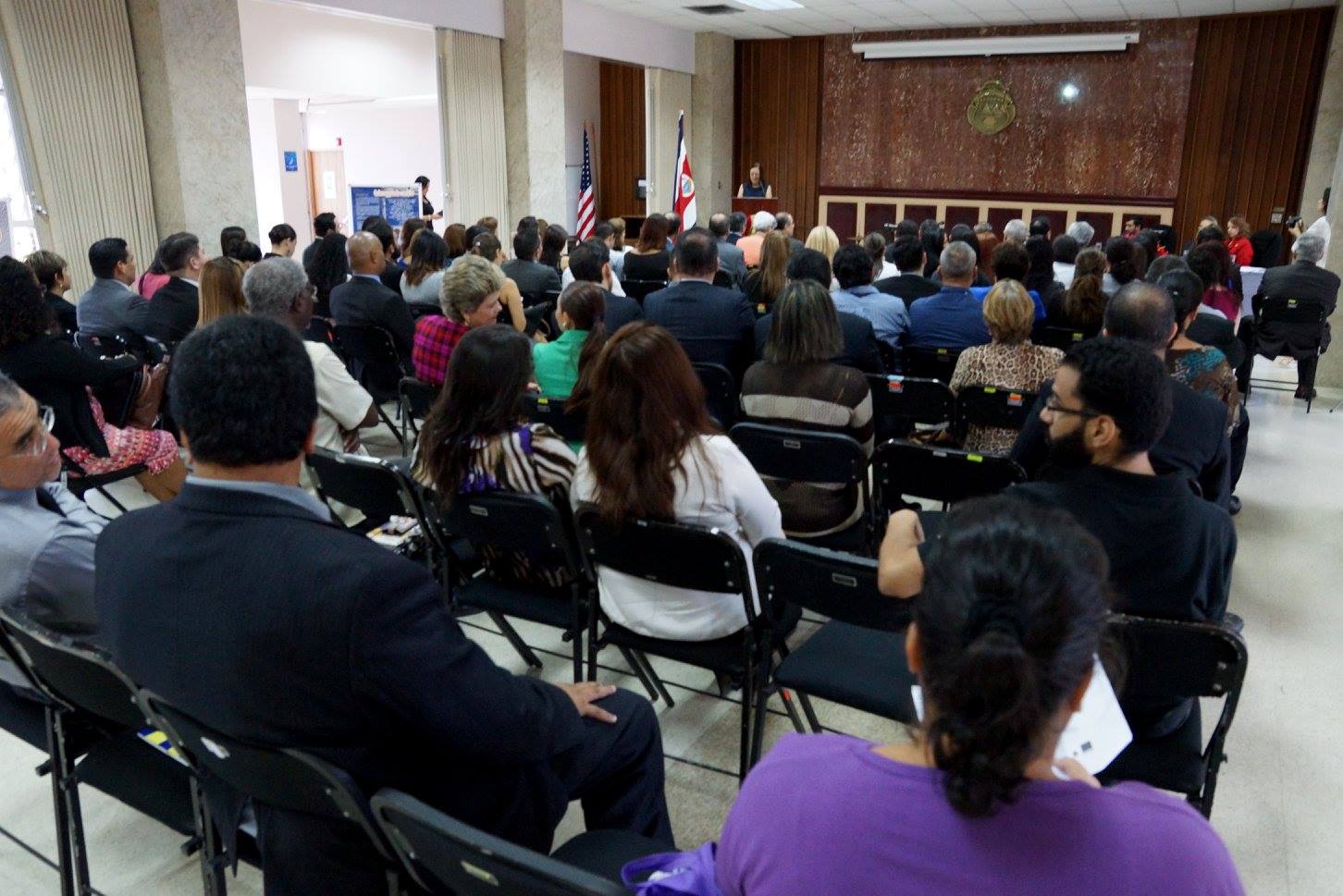
A regional proposal by the Costa Rican Judiciary’s Restorative Justice Program was chosen from more than eighty projects submitted to an international competition organized by the European Union. The program proposes a regional approach to restorative justice, and will receive support from the European Union for its implementation, said European Union Ambassador Pelayo Castro Zuzuarregui.
Costa Rica, Mexico and Colombia will strengthen the application of restorative justice in criminal and juvenile criminal matters with emphasis on vulnerable communities and populations, such as indigenous groups.
Mexico’s President of the Superior Court of Justice, Sergio Javier Medina, a partner in the regional program, stated that his Center for Mediation, Conciliation and Restorative Justice uses a model that seeks family and social integration, and addresses the underlying causes of a conflict with an emphasis on crime prevention.
“Mexico will share its best practices in training, implementation, evaluation and dissemination of restorative justice with Colombia, Costa Rica and the European Union, with the certainty that working together will allow the Mexican center to serve as a model for the implementation of restorative justice,” said Medina.
This is the first cooperation project of this type supported by the European Union in Costa Rica with Latin American partners, and, said Castro, it “unites two fundamental objectives of the EU: Justice and the protection of human rights.
Restorative justice is an alternative model that promotes social cohesion and contributes to resolving criminal disputes with comprehensive solutions, and greater efficiency and a humanized treatment of crime, continued the EU Ambassador.
Colombia’s President of the Superior Judiciary Council, Martha Lucia Olano de Noguera, another program partner, said that as her country implements its peace process, they require, “A justice system committed to rebuilding the social fabric weakened by years of armed conflict. Now more than ever, restorative justice in Colombia is very necessary and timely.”
In Costa Rica, where the restorative justice programs has been operating for five years, the regional project aims to further the judiciary’s strategic objectives to reduce judicial delays, promote citizen participation, modernize judicial management, and improve human resource management, said project coordinator Costa Rican Judge Doris Arias Madrigal. Arias said that restorative justice avoids impunity through a process by which “the accused person assumes his or her responsibility in the reparation of the damage to the victim and to the community.”
In Mexico, mediation and conciliation services have been offered since 2002 as alternative dispute resolution mechanisms, and there are now 18 regional centers. Since 2014, this procedure has been used in adult and juvenile crime processes.
In Colombia, the country’s restorative justice program was established in January 2005. The country hope to strengthen mechanisms for victim assistance, and for respecting gender-based and human rights through restorative justice and conflict resolution programs.



