


 SIGN UP FOR OUR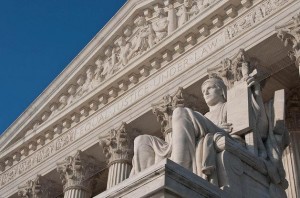
Detail of SCOTUS building in Washington, DC.
Costa Rica is part of a bloc of 18 countries led by Mexico that sent an amicus curiae brief to the Supreme Court of the United States (SCOTUS) regarding SB 1070, a controversial law in the State of Arizona that aims to curb illegal immigration. The brief supports the administration of President Barack Obama, who has voiced his opposition to the measure in Arizona.
An amicus curiae brief is a document that can be presented to a court by a party not directly named in the case at hand, but that may have an intrinsic interest in the outcome of the case. The document is also referred to as “friend of the court”, and can have significant influence in how a case unfolds.
The Secretary of Foreign Affairs in Mexico made the announcement regarding the brief yesterday.
Besides Mexico, Costa Rica also joins Argentina, Bolivia, Brazil, Colombia, Dominican Republic, Ecuador, El Salvador, Guatemala, Haiti, Honduras, Nicaragua, Panama, Paraguay, Peru, and Uruguay.
In the document addressed to the SCOTUS, the Mexican government and the signatory countries underscore that the Arizona law impinges upon foreign relations and blocks effective communications since it creates an immigration policy that differs from federal statutes.
The brief includes the following statements: “Certain parts of the law make immigration a crime and could be applied selectively, something that could violate the fundamental rights of Mexican citizens who reside in, or visit, Arizona.” Moreover, “Mexico will follow the developments of this hearing, scheduled for April 25th, and will continue to make use of all legal resources available to safeguard the rights of Mexicans who live in, or visit, the United States -regardless of their immigration status.”
In the past, Mexico has presented similar briefs to the SCOTUS in the same case. The law in question is being challenged by civil rights groups and the US government; an entity that cannot directly intervene in the legislative affairs and rulemaking efforts of each individual state in the Union.
The democratic and judicial system in the U.S. calls for due process in these matters, and this case in particular has already been reviewed by federal courts. The SCOTUS will decide on the constitutionality of the matter, a function similar to our own Sala Cuarta.
Source: El Milenio (Mexico)



