


 SIGN UP FOR OUR
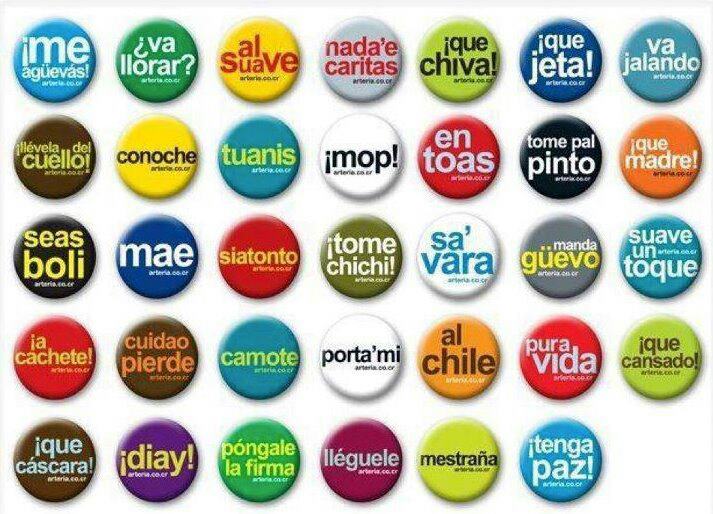
Foreigners that live in Costa Rica have learned that knowing Spanish is sometimes not enough to understand or communicate properly in the country. Costa Ricans seem to always have a nickname for things and places, there are also a lot of phrases used by “ticos” that can be both funny and confusing.
For those foreigners that have spent enough time in Costa Rica and are already familiar with the country’s slang many of the following will be familiar while for those visiting or planning to visit it might be useful to understand some of the most used terms or idioms in “tico” language:
Pura Vida: Of course we have to begin with the simplest and most popular one, Pura Vida can mean hello, good bye, good, and cool.
Tuanis: Supposedly it comes from “too nice”, although no one really knows for sure. It means nice, cool, good.
Mejenga: A soccer game.
Birra: Beer
Jupa: Head
Mae: Dude
Al Chile: Really? Seriously? or Really! Seriously!
Es un queque: It’s easy, simple.
¡Qué Güevon!: This means dumb, or behaving in a ridiculous or dumb way.
Buena Nota/ Mala Nota: It refers to a person or action that is either nice (Buena Nota) or not nice.
Pirata: An informal cab.
Lata: The bus
Manudos: People that live in Alajuela or those that follow the Alajuela soccer team “La Liga” (which is another name for the province of Alajuela)
Es un hueco: Although “hueco” means “hole” ; in this case it refers to a place that is not nice, dangerous.
Yodito or Yodo: Coffee
Brete: Work
Bocas: Boca means mouth, but when ticos talk about “bocas” we refer to the small size dishes or snacks that you get at a bar along with your beer/drink.
Cabra/Cabro: Slang for girlfriend or boyfriend
¡Qué taco!: How scary!
Es una teja: A person who is super nice. “Teja” used as slang also means 100 colones.
Un rojo: A thousand colones. (The thousand colones bill in Costa Rica is red)
No tengo un cinco: I don’t even have a penny
Limpio: The word in itself means clean; ticos use it to refer to someone who has no money.
Juega’e vivo: Someone who is conceited
Pura paja: Someone who talks a good game but doesn’t deliver.
¡Qué habladas!: A ton of B.S.
Jale: Lets go
¡Qué madre!: Oh damn!
Rajado: Amazing
Chorizo: Questionable business
¡Qué jeta!: No way!
¿Tiene menudo?: Do you have any change? (small bills/coins)
Güila: A kid, or if it’s La Güila, this means girl or girlfriend.
¡Sea tonto! : It can be translated into, “Come on!” or “Oh my God!”
Me ahüevas: Something that is just too disappointing. “Ahüevado” is also common and it means someone or something that is sad or depressed/depressing.
A cachete: Awesome, great
Es vara: It’s just not worth it. “Vara” used alone means “thing”.
¡Qué cansado!: What a drag!
Hora Tica: Tico time, which means late.
Compa: Friend
En todas: Excellent, perfect.
Gajo: A car in bad conditions
Pachuco: People with low educations that talk a lot of slang and behave “inappropriately”.
Polo: Out of style, someone old fashioned and sometimes a little ridiculous.
Chata: Usually teenagers or young adults with low education that look or act as though they are part of a gang (many are).
“¿Le cuadra?“: Do you like it?
These are just some of the endless number of words and phrases used by Costa Ricans that you may hear in a daily basis in this wonderful country. If you have others you want to share with us or that you don’t know what they mean, we will do our best to help you clarify!



