


 SIGN UP FOR OUR
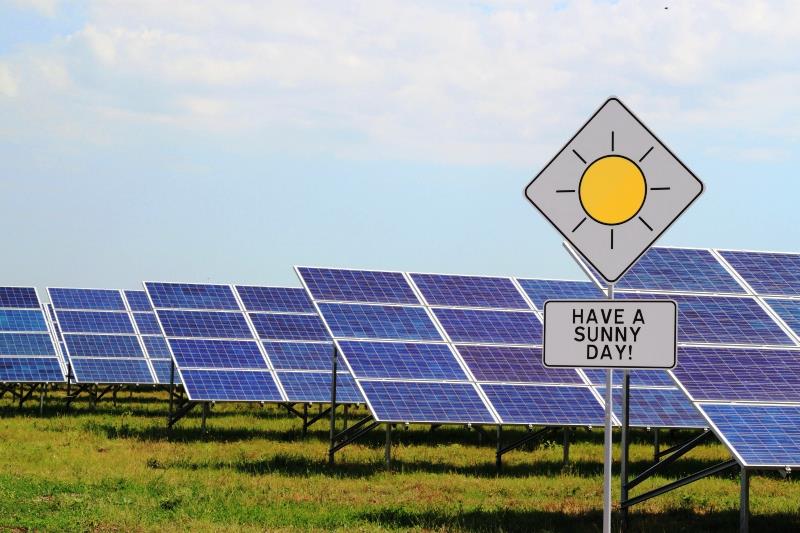
Over 2,000 homes and businesses in Guanacaste, Costa Rica will benefit from a new clean energy source: that created by the region’s abundant sun, said a report in Central America’s Summa business magazine.
The energy distribution company Coopeguanacaste, R.L. has developed the Juanilama Solar Park, the largest in the country with an installed capacity of 5 Megawatts (MW) and generating 9 Gigawatts (GWH) of energy per year.
The 5-hectare park is located in Juanilama in Belen de Carrillo, Santa Cruz, in the northern Pacific province of Guanacaste.
The operation of the Juanilama Solar Park will achieve a reduction of about 1,500 tons of carbon dioxide (CO2) emissions per year, which is equivalent to planting 5,350 trees, which signifies a large contribution to the environment and the country’s goal of reducing its carbon footprint.
The Juanilama Solar Park has 15,456 photovoltaic panels with high efficiency HIT technology of 325 Watts each, according to data supplied by Panasonic, the company in charge of project design and construction.
According to Rafael Linares, Associate Director of the Energy Solutions Unit of Panasonic Latin America, HIT solar panels achieve greater use of solar radiation per square meter compared to conventional or polycrystalline panels as they consist of a hybrid structure which combines ultra-thin layers of amorphous silicon and micro-crystalline microplates that reduce the loss of electrical energy, increasing its performance and reliability. According to Linares, Panasonic, in addition to manufacturing the solar module, provided a comprehensive solution in terms of system design, installation, commissioning and warranty.
The park required an investment of US$ 8.6 million ,and was achieved through the MGM Sustainable Energy Fund (MSEF), a private equity fund that promotes energy efficiency and renewable energy projects in Latin America.
The Juanilama Solar Park is the first Latin American project to be implemented through a bilateral agreement between the government of Japan and Costa Rica, called “Joint Crediting Mechanism” (JCM), which promotes the fight against climate change by applying clean technologies that reduce greenhouse gas emissions, said the report in Summa.



