


 SIGN UP FOR OUR
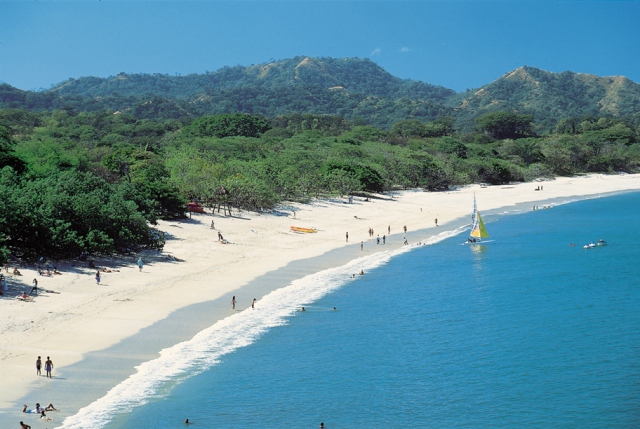
The Westin Conchal Golf Resort & Spa, on Costa Rica’s north central Pacific coast, is the first all-inclusive beach hotel in Latin America and the first Starwood chain member to qualify as carbon positive.
Florida Inmobiliaria, a subsidiary of Florida Ice & Farm Co. (FIFCO), owner of the Conchal resort, set aside 40 hectares of dry forest and mangrove of the resort’s some 930 hectares as the Conchal National Wildlife Refuge in 1990. This protected area serves as a carbon sink, offsetting tons of the report’s carbon emissions.
With a historic concern for the environment solidly in place, the resort has a level-5 (the highest) Sustainable Tourism Certificate from the Costa Rican Tourism Institute, and has been awarded ecological blue flags in the beach, community, and protected area categories through the Water and Sewer Agency’s (AyA) program.
In 2015, FIFCO expanded the Conchal development and opened the first Westin Hotel in Costa Rica. And in 2016, the 410-room hotel and 18-hole golf course were certified carbon positive after they compensated for a 25 percent more than their carbon emissions.
The company’s environmental management department conducted a baseline study in 2014, and found the resort produced the equivalent of 4,880 tons of CO2 emissions, according to information provided by the company.
The external carbon audit process was then carried out by the Technical Standards Institute of Costa Rica (Inteco), and the company’s carbon footprint is undergoing the lengthy process of validation by the Climate Change Directorate of the Ministry of Environment and Energy, said the hotel.
During 2015, a reduction of 1,294 tons of CO2 was achieved through a number of steps at the Cabo Velas, Santa Cruz, Guanacaste facility. This year in June, the hotel’s 2016 carbon footprint will come up for re-certification and verification.
The measures taken to date include increased efficiency, and decreased energy and fuel use. Further reductions in emissions were achieved by offsetting, both through the resort’s forest, and by purchasing carbon units on Costa Rica’s carbon market.
“Co2 emissions were reduced by implementing practice such as improving internal transportation routes on the resort’s 11 vehicles that take guests from one place to another on the premises. Savings were achieved by creating routes and schedules that allow for saving fuel. Energy efficiency was the main carbon reduction initiative, and involved making changes to air conditioners and the refrigeration systems,” said María Pía Robles, FIFCO corporate relations manager.
“The external verification, by the auditor and validator, both for carbon inventories and for the offsetting, as well as the cost of the external compensation, represented an investment of close to US$30,000. This does not include investments made to reduce energy use in the hotel operations,” continued Robles.
“FIFCO operates under a triple utility model where environmental performance has a value that goes beyond the financial,” explained Robles. “Carbon neutrality, or rather a carbon positive state, is part of the strategic objectives of FIFCO and our business units … We hope guests will choose our hotel not only for the beauty of the place and the level of service of our hotel, but also for the environmental and social attributes of our service.”
The methodology used for the quantification and estimation of carbon emissions at Westin Conchal is based on international protocols such as the Greenhouse Gases Protocol of the WRI (World Resources Institute), ISO 14064-1 and -2: 2006 for the quantification of the carbon footprint.



