


 SIGN UP FOR OUR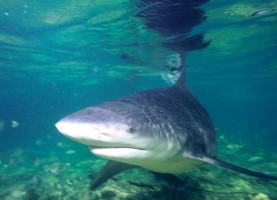
Bull shark. Wikimedia Commons
(Los Angeles, Calif.) – The most fintastic time of the year is back and making a huge splash! SHARK WEEK, television’s longest-running and most anticipated summer event, airs Sunday, June 26 at 8:00 PM ET/PT and continues through Sunday, July 3. This year, SHARK WEEK celebrates its 28th anniversary and will keep viewers on the edge of their seat with all-new jaw-dropping and compelling shark stories and, for the first time ever, offering an immersive virtual reality experience. Working with nearly two dozen of the most respected marine biologists and science institutions, SHARK WEEK will also highlight some of the most recent breakthroughs and developments to reveal remarkable new insights into these magnificent creatures.
Additionally, award-winning film director, producer, writer and actor Eli Roth (“Inglourious Basterds”, “The Green Inferno,” and “Knock Knock”, amongst other projects) returns as host of SHARK WEEK’s hit late-night talk show Shark After Dark for a second year in a row. For five consecutive nights beginning Sunday, June 26, Roth will bring his unique style to Shark After Dark and make his mark on SHARK WEEK with celebrity guests, shark fans and shark experts, among many others. Roth will look back at some of the highlights from SHARK WEEK and look ahead to give viewers a sneak peek at the next day’s SHARK WEEK programs.
Last year, Discovery made history with “El Monstruo,” an exclusive program about Great Whites off Cuba. This year, Discovery traveled to Costa Rica to film the plight of young bull sharks whose lives begin in a dangerous river:
Jungle Shark
Marine biologist Dr. Craig O’Connell and Andy Casagrande travel up the Sirena River in the rainforests of Costa Rica to try and find out why young bull sharks swim up the river, and how they avoid the 12-14’ American crocodiles living there. O’Connell deduces the sharks smell the crocs and creates a first-of-its-kind croc scent-based bull shark repellent – and SHARK WEEK reveals a possible important discovery that could save human lives.
In 2009, conservationists and biologists of PRETOMA, a non-profit organization dedicated to the research and protection of marine resources in Costa Rica, made an interesting discovery in the Rio Sirena rivermouth, located in the Corcovado National Park: The juvenile bull sharks they tracked were getting bigger than expected.
PRETOMA researchers expected young bull sharks measuring three meters in length. They were surprised when the steel traps they set up were destroyed by four-meter long sharks. The researchers were then forced to pursue female baby bull sharks measuring one meter in length.
In Costa Rica, bull sharks swim in shallow waters. They are known as “tiburón barrosa” (mud sharks) because they enjoy cooling off in muddy, brackish and shallow waters near the coast. Bull sharks can survive in freshwater environments, and they are true “river sharks” as they have been known to swim all the way to the Great Lake of Nicaragua – if they can make it past the crocodiles and caimans.
Jungle Shark will also be shown aboard select Southwest flights to Costa Rica.



