


 SIGN UP FOR OUR
 Barcelona (Spain), Dec. 11 — Santiago Peralta went from being an Ecuadorean peasant, raising cows and selling guinea pigs as a child, to being ranked the Best Chocolatier in the World by the Fine Chocolate Industries Association (FCIA).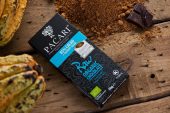
“Thank God I’ve never been to any chocolate school,” says the founder of the family company Pacari, to EFE in Barcelona, who boasts growing the first organic cocoa, and in 2016 managed to take, for the fifth consecutive year, the title of World’s Best Chocolatier, in the International Chocolate Awards presented in London.
Peralta, who confesses he had no idea about chocolate when he got involved in the business almost 15 years ago, explains that this was what, paradoxically, allowed him to go beyond the industry “standards” and obtain, based on trial and error, “a method that creates better chocolate.”
The 44-year-old Ecuadorian started by inventing his own technology to process cocoa due to a lack of money to purchase machines, and today he says he is “fighting against the bias” that the “stars” in chocolate production are Swiss or Belgian, saying the Ecuadorian Amazon is “the birthplace” of cacao.
“They are not stars. These ‘sacred cows’ have a more industrial and best-selling chocolate, but it is not the best,” says Pacari’s general manager.
Peralta is clear that his goal is not to compete with them, and recognizes that Pacari – despite being in 42 countries and having received more than 160 international awards – is still a small company in a large global industry.
“We are a company that sells 6 million dollars in a sea of 200,000 million dollars. We barely make a dent, we are young, but we have changed the chocolate industry worldwide,” he said.
Pacari, says Peralta, has “revolutionized” the sector with its fair trade practices, which benefit more than 3,500 small farmers, and which, he acknowledges, increases the cost of their chocolates, which are sold at between 3 and 50 Euros in Spain.
“Trying to pay the cheapest price [for materials] makes us starve the people who are feeding us; that is absurd,” warns Peralta, a lawyer by profession.
In addition, Pacari’s cocoa, which fetches double the price of its industrial counterpart in Ecuador, Colombia and Peru, is cultivated with certified biodynamic agriculture techniques developed by the early 20th century Austrian philosopher Rudolf Steiner. The technique draws on diverse factors, including astronomy, to understand soil and plant development.
Paccar’s chocolates, which are free of soy, dairy, gluten, chemical and transgenic ingredients, have been recognized by the International Chocolate Awards (considered the Olympics of fine chocolate) for their “exceptional taste, that is powerfully faithful to the grain,” with soft floral and fruit tree notes.
For Pacari, the bitterest taste this year was the 7.8-magnitude earthquake that shook Ecuador on April 17, causing a total of 673 deaths.
“It was tough, it’s been a terrible year; 500 families with whom we work had serious damage to their homes, they could not go to work, we lost crops and we had to go to the rescue,” explains Peralta, who has proposed to launch a project to teach safe construction practices to these families.
The year is ending on a sweet note, however, with the recent signing of a Multi-Party Agreement between the European Union and Ecuador, which Peralta says is important because it prevents “an uncertain future scenario” in a market that represents 60 percent of Pacari’s sales, and which the Ecuadorian company is determined to continue seducing. EFE/InfoLatAm



