


 SIGN UP FOR OUR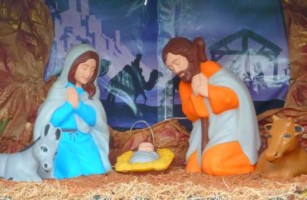
Jack Donnelly
By Jack Donnelly
Article 75 of the Constitution states that Costa Rica is a Catholic country. That sounds more theocratic than the reality. The majority of Ticos will readily affirm they are Catholics, but many are rather laid back in their approach to observance and dogma. This is especially true in the areas of relationships, marriage, divorce, birth control, etc. There is an active debate in the country over the role the Church should play today. Negotiations between the Vatican and the Government are underway to update the particulars of the relationship.
One Catholic tradition that is still very popular is el rezo del niño, the prayer of the (Christ) child. This is an event that takes place in homes and includes extended family, friends, neighbors, etc. The clergy plays no role in this observance. It takes place while the small nativity scenes are still displayed in homes from Christmas. The season for the rezo starts on January 7th, after Three Kings Day. It runs up to and including the Feast of Candlemas on February 2nd.
In Spanish, a nativity scene may be called a nacimiento, a portal or a pesebre (manger). In Costa Rica they also use the term pasito. My Tico friends commonly, but not exclusively, apply the term pasitos to the small indoor scenes and use portales to refer to the larger outdoor displays. However, all four terms may be used interchangeably.
Larger outdoor scenes can be very elaborate with life-sized arrays of people and animals. They are well lit and attract a lot of sightseers. People will go on tours of neighborhoods at night to see especially good displays, much like going out in the U.S. to see illuminated Christmas decorations.
The rezo is a happy festive occasion, a nice family get-together. It takes place in front of the manger scene and is conducted by a rezador(a), moderator (literally, pray-er), male or female. The moderator says and sings the rosary with some explanation of the five mysteries. The audience joins in for some of the prayers. The rezadores are paid for their services.
A simple rezo might be conducted without music by one rezador. Fancier rezos may involve a moderator with a good singing voice and several accompanying musicians. In this case there may be some carols or other religious music.
The rezo is very much a family or neighborhood event. It is a nice party with a religious theme, but not so much so as to exclude people uncomfortable with Catholic ritual.
As with all such events in Costa Rica, there is food. The host family provides food and drink for all in attendance. It is even said some less-than-devout Catholics develop a sudden interest in prayer during this period. They may attend several rezos each week, perhaps more for the edibles than any spiritual reinforcement. Pray often, eat well.
At the end of the event you will likely be given a bag with a few extra goodies to take home. It will be small pastries, little homemade rolls, and such.
February 2nd marks the end of the rezo season. It always ends before Lent: Ash Wednesday, the beginning of Lent, cannot fall earlier than February 4th. On the 2nd the Pope gives a blessing for the Presentation of Jesus at the Temple. Some people watch this on TV and that is their rezo. It is also broadcast over the radio. While this may save the cost of the rezador, the host is still on the hook for food and drink.
About the Author
Jack Donnelly
Jack Donnelly has been a life-long enthusiast of Latin American folk culture. As a young man, during the 1960s, he studied cultural anthropology at the Universidad de las Américas in Mexico City. He went on to volunteer with the U. S. Peace Corps in Guatemala.
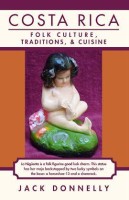
Now, Donnelly lives in Heredia, Costa Rica. He travels around the country investigating and documenting folkloric events. Donnelly is the author of COSTA RICA: Folk Culture, Traditions, and Cuisine which is available on Amazon in paperback and Kindle.



