


 SIGN UP FOR OUR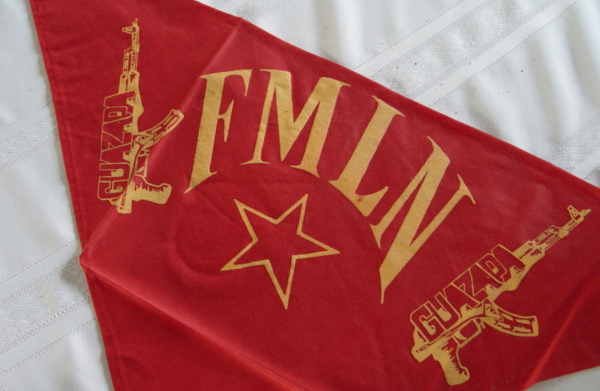
On June 1, 2009 US Secretary of State Hillary Clinton arrived in San Salvador to attend the swearing in of El Salvador´s newly elected president, Mauricio Funes. Secretary Clinton was dressed in red, the color of the Farabundo Martí National Liberation Front (FMLN), the political party born of a former guerrilla army. Such a sight would have been impossible to imagine two decades ago when the United States was pouring millions of dollars into the country to defeat the FMLN during El Salvador´s 11-year civil war. On that June day, however, many were eager to usher in a new era. A former journalist, Funes campaigned as a moderate, dressed only in white, and was accompanied by Vice President Salvador Sánchez Cerén, a former guerrilla commander whose first diplomatic visit was to Cuba.
Despite being an odd couple, they had won FMLN´s first election.
Three years later, El Salvador´s support of the FMLN has cooled. In a poll conducted last month by the Center of Investigation of Salvadoran Public Opinion, 76.2% of respondents disapprove of FMLN´s decision to select Sánchez Cerén as their candidate for president in 2014 and only 20.4% prefer the FMLN to other parties. In legislative and local elections held in March of this year, the FMLN lost four seats. Their main opposition ARENA gained fifteen. As for San Salvador itself, the FMLN´s candidate Shafik Handal Jr., son of another guerrilla leader, received only 32% of the vote. Norman Quijano, ARENA´s next candidate for president, captured 63%.
Why the change? The FMLN has not learned to evolve, and Salvadorans are tiring of it. The recent constitutional crisis provides an example.
This June, the Constitutional Chamber of El Salvador´s Supreme Court declared two appointments of Supreme Court justices made in 2006 and 2012 to be invalid. The Constitution, the Chamber asserted, allots for only one appointment per legislative period, or once every three years. However, in 2006 and 2012, both instances were the second appointments made by the Legislative Assembly. As a resolution, the Constitutional Chamber recommended the re-election of the invalid appointees.
The FMLN and its allies reacted by calling the Chamber´s actions grounds for a right-wing coup and deciding to take the case to the Central American Court of Justice in Nicaragua, whose decision the Constitutional Chamber has viewed as irrelevant. Further, the FMLN and allies voted in an alternate Supreme Court that has no legal power.
Recognizing the threat to judicial independence, constitutional courts from Guatemala, Costa Rica, Honduras, and the Dominican Republic all have voiced support for the Constitutional Chamber. Navi Pillay, the United Nations High Commissioner for Human Rights, sent a letter to Sigfrido Reyes, one of FMLN´s founders and the current President of the Legislative Assembly, “calling on him to put an end to the conflict with the Judiciary in a manner consistent with the international human rights obligations of El Salvador.” Members of US Congress are weighing in, too, some with the premature suggestion that the US suspend aid to the developing nation.
President Funes has recently played a limited role as mediator, but negotiations between two groups headed by ARENA and the FMLN have stagnated. With each day prolonging the crisis, the FMLN appears increasingly disconnected. ARENA, meanwhile, is happy to play the guardian angel of El Salvador´s constitution.
The FMLN made a bad bet in choosing to endorse its own party at the expense of judicial independence and a worse one by deciding to double down in support of an illegitimate Supreme Court. Of course, ARENA played the same games while in power, but the FMLN won with Funes because people hoped for something different. Remember Hillary´s wardrobe? Three years of constant discord in Funes´ administration–this recent constitutional crisis is only the latest example– has left both Funes and the FMLN looking unfit for the task.
In a country plagued by organized crime and a mass exodus of youth abroad, Salvadorans no longer want former civil war commanders dressed in red. Salvadorans desperately want peace. If the FMLN wants the Salvadoran people to trust them in delivering it, they must understand that the best way is through stronger democracy, not strong-arming political parties, regardless of their color.
*Graciously contributed to The Costa Rica Star by Tim Stauffer. A Peace Corps volunteer in El Salvador from 2008–2011. He now is a graduate student at New York University.



