


 SIGN UP FOR OUR
The reputational risks associated with last year’s financial scandals such as the Panama Papers, and the arrests and imprisonment of several high ranking Guatemalan politicians on banking-related corruption charges, are the greatest current threats to Costa Rica’s and Central America’s banking sector, said analysts at Central America’s business strategy magazine, Estrategias y Negocios.
The 180 banks analyzed in Central America (71 banks), Panama (74) and the Dominican Republic (35), provide a good cross-section of the region’a banking sector.
The sum of assets of banks in Costa Rica, Guatemala, Honduras and El Salvador (nearly US$126 billion) exceeded that of Panama’s bank holdings (a little over US$121 billion) due to faster growth in the Central American countries, said analysts.
Some of the important challenges faced by the sector include technology, however analysts said the structure of Central America and Costa Rica’s markets does not point to increased risk in the digital age.
Total assets in Central America grew 6.85 percent, deposits by 7.06 percent, net portfolio by 7.81 percent, and net profits by 7.18 percent.
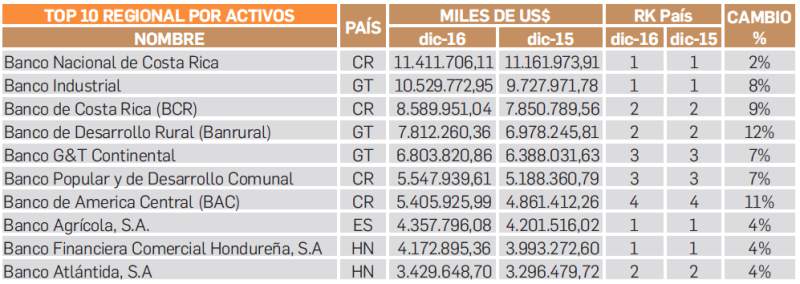
Costa Rica’s Banco Nacional, Banco de Costa Rica, Banco Popular, and Banco de America Central are among the top ten asset-holders in Central America (excluding Panama).
El Salvador and Guatemala had negative growth over the past year, Panama was the hardest hit in terms of negative growth, the Dominican Republic shoed good growth levels, and Costa Rica moderate levels of growth.
By mid-2017 analysts said the region’s banking sector had stabilized after last year’s scandals, and warned that the region should stay alert to potential future non-financial risks that may affect banking performance.



