


 SIGN UP FOR OUR
 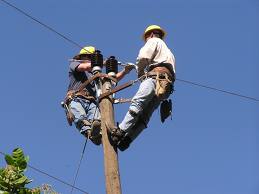 Marcos Adolfo and Christopher Zelaya, electric utility technicians from Coopeguanacaste, got to take advantage of a training program with the Georgia electric co-op Coweta-Fayette EMC. The 14 day training session focused on the safe construction of lines and working with live lines (lines that have energy running through them).
Marcos and Christopher can now take the information and skills that they learned in Palmetto back home with them to Costa Rica. Their colleagues and the rest of Coopeguanacaste should benefit greatly from this training, as it will be shared with them for the betterment of operations. Once the newly learned skills are set into play, there should be better membership service (less loss of power while lines are being worked on) and potentially a better situation for protecting the animals of Costa Rica from getting electrocuted.
Coopeguanacaste covers some 1850 miles of service area and has roughly 60,000 members across the Nicoya region of Costa Rica. Lineman work in this area can prove challenging because of the lack of resources and harshness of the terrain. Costa Rica is filled with dense forests and jagged mountainous areas with deep gorges.
“It was a bit of a challenge at first due to the language barrier, but it was evident that they understood line work,” said Chris Stephens of Coweta-Fayette EMC
The pair of Costa Ricans also showed the members of the Georgia cooperative some of their own resourceful skills. Much of the heavy work done in the United States is assisted by modern power tools and heavy equipment. In Costa Rica, workers routinely have to build lines (piking poles and setting cross arms) by hand.
Coweta-Fayette EMC has helped to support NRECA International Foundation for years, making the two co-ops like brother and sister organizations. NRECA has been involved with bringing electricity to Costa Rica since 1963.
The training program was a mutually beneficial success.
“It’s important to continue working together to exchange information, ideas and differences in culture,” Stephens said.
Source: ECT co-op



