


 SIGN UP FOR OUR
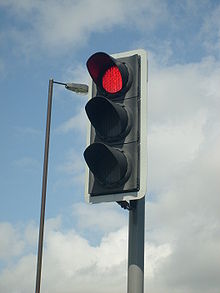
The Costa Rican Ministry of Public Works and Transport (MOPT) announced the third phase of its solar conversion project, whose ultimate goal is to have all traffic lights running on solar power in the year 2022, said the institution in a press statement yesterday.
This year, an additional 76 stop lights will have photovoltaic systems. The project has received US$1 million in funding from the Costa Rican Road Safety Council (COSEVI), and installation is to be carried out by Enterprise System RC S.A., the company which has successfully completed the project’s first two phases.
If everything goes as planned, by December a total of 235 traffic lights will be running on the sun’s energy, said MOPT engineer Diego Rugama, all of which are in San José. This is approximately half of all stop lights in the centralized traffic light system which is made up of a total of 474 stop lights in San José, Alajuela, Heredia and Cartago.
The board of COSEVI will review this phase of the project this week and send it to be reviewed by the national comptroller’s office, so that work can begin between July and August, said the MOPT.
Rugama explained that in addition to solar panels, lithium batteries are placed in the system to allow energy to be stored so that the devices can operate up to 14 hours with the absence of sunlight. And if for some reason the battery storage is insufficient, the lights automatically switch to the electrical system so that their operation will not be interrupted.
Prior to each stage of the project, the stop lights are studied to determine the input of solar radiation at the site and to identify any obstacles to sunlight such as trees or buildings, said the MOPT. These factors determine the number of panels and batteries to be installed at each intersection.
MOPT-COSEVI estimate that in 2022 all the traffic lights in centralized system will function with solar energy.



