


 SIGN UP FOR OUR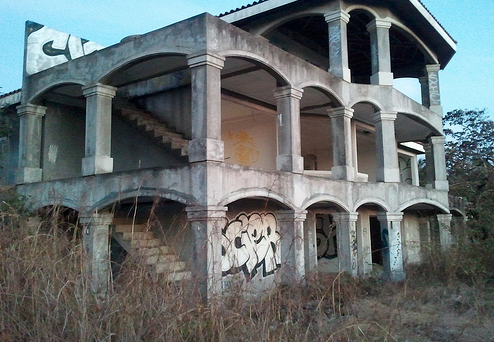
Note: This article was sent to The Costa Rica Star anonymously from a gmail.com email account. It raises some concerns about a condo development project here in Costa Rica. We have no way to verify the accuracy of this content, however we wanted to publish it to see what kind of comments and reactions are taken by the readers. Have you experienced anything like this?
As the first cold winds of an approaching winter begin to blow across the land, thousands of Canadians – and not a few Americans – share a common dream, a dream whose siren song calls ever louder as the days grow shorter, darker and colder. It’s a dream of warm days and perfumed nights, of soft sandy beaches, exotic birds and reptiles, cool, refreshing drinks by blue sparkling pools, alfresco spice-infused meals eaten under a canopy of brilliant stars, while listening to the calming, sensuous swish of a gently rolling surf. For many it translates into a week, or maybe two weeks, at a stress-free, all-inclusive hotel in, say Mexico, Cuba, Jamaica or Dominican Republic.
But a growing number of aging or elderly North Americans have set their sights higher than a week in the sun. They want nothing less than an affordable permanent winter home, ideally in a safe, friendly environment. And thousands have found their paradise in Costa Rica, the ‘Rich Coast’ in Central America, sandwiched between Nicaragua to the north and Panama to the south. It has so much to commend it to retired or retiring middle-class ‘gringos’. It is a stable democracy. Its people are friendly and, uniquely in Latin America, it has no army, navy or airforce, having decided after a brief civil war in the late forties and early fifties, to abolish its armed forces and spend the money saved on education. That decision means it has one of the highest literacy rates in all the Americas – north, central and south.
And, since the eighties it boasts another attribute that’s guaranteed to make it appealing to many North Americans sickened by the relentless degradation of the air we breathe and the environment we live in. Coast Rica proclaims itself the Mecca for those pilgrims seeking the Promised Land; of conservation alongside sustainable eco-friendly real estate development. Successive governments have publicly pledged to scrupulously monitor all development, especially in such eco-sensitive areas as its sparsely populated northern province of Guanacaste, where breathtakingly beautiful beaches, volcanoes and rain forests abound. This habitat supports a bewildering variety of flora and fauna such as wild orchids, mangrove swamps, red-eyed tree frogs, howler monkeys, jaguars, toucans and birds of paradise.
The Costa Rican government, perhaps mindful of the fact that Nicaragua, under its increasingly unpredictable president, Daniel Ortega, claims the province as its own, has made Guanacaste a special case. It championed the so-called ‘Papagayo Project’, a mixed government/private investor multi-million dollar development north of the provincial capital, Liberia. Other projects followed, especially in the dry and isolated Nicoya Peninsular. By the early nineties Costa Rica was being hailed as the number one eco-tourism destination in the world with most visitors arriving for ecotourism-related reasons. The buzzword was bio-diversity and the future seemed rosy – and green – but not for long.
The rot began under the administration of President Calderon (currently fighting to stay out of jail on dishonesty charges). Under his mandate, an unparalleled building surge occurred, bereft of any ethical or legal control. Vast tracts of once-pristine wilderness were plowed under. Vital aquifers were drained to make way for hotels and golf courses. Miles of new roads appeared, illegal logging flourished and all-inclusive hotels was built hard up against eco-sensitive national parks. According to the National Geographic Traveller, the Calderon Government ‘abandoned ecological principles established during proceeding governments, paving the way for wanton disregard for protective laws.’
A study by the Centre for Responsible Travel (Crest) is equally scathing. Crest, based at Stanford University and Washington, spent two years working with Costa Rican experts and said it had ‘ample evidence’ that illegal and uncontrolled development had caused fresh-water shortages, pollution of ocean waters and beaches, illegal destruction of forests and mangroves, and in some cases, stopped access to public beaches. The non-government organization concluded: ‘This process is damaging Costa Rica’s international image as a green and sustainable destination, eroding the tourist experience, and causing a decline in the quality of life in a number of coastal communities.’
Practically since its inception the Papagayo project, and others in its wake, have been dogged by corruption, fraud and endless cases of individuals and companies blatantly and cynically trashing the rules governing sustainable development. It is now endemic and conservation has become a joke. Mangrove swamps are being drained to make way for hotels, tropical reefs are vanishing as marinas are built and displaced soil is washed into the ocean; wild life is being slaughtered. The University of Costa Rica estimates that the monkey population has been reduced by fifty per cent as a result of coastal development.
One of the beneficiaries of the eco-tourist development surge of the eighties and nineties was the Guanacaste coastal resort of Los Playas del Coco, or Coco Beach, as it is known by thousands of visiting and resident Canadians and Americans. Once a tiny fishing village known to a handful of tourists, it’s now a thriving party-town, bursting with bars, cafes and restaurants, attractive to both non-native and native ‘Ticos’ alike. It is surrounded by all-inclusive resort hotels and condominium complexes, and it is at the heart of Corruption Central. Two years ago nearby all-inclusive hotels were raided by the police and closed down after it was discovered that raw sewage was being nightly trucked from them and dumped in nearby coastal waters and rivers. (The hotels had never, as required by law, built proper on-site sewage facilities) And guests, from as far away as Germany, were arriving to find they had nowhere to stay. And at nearby Tamarindo, where the destruction of native flora is so complete the developers have created a mini-Miami Beach, sewage from condos and hotels being pumped underground straight into the ocean across the road, causing the town’s beach to be closed down for several days. At the time, Tamarindo, one of the most expensive and chic resorts in the area, didn’t even possess a public sewage treatment plant.
In Coco a large number of the condominiums that went up in the building spree are, for a variety of reasons, illegal, even though they are practically all inhabited by North Americans who have spent their life-savings buying them. Coco is in the municipality of Carrillo and last March, the Ecocivil Council of Carrillo, an environmental organization, complained to the Comptroller General of Coast Rica that the municipality should have demolished, as required by law, forty illegal constructions – most of them condominium complexes in and around Coco. The citation alleges that, among other things, the condos lack building permits, municipal licenses, haven’t paid local taxes, and, in some cases, encroach on the coastal zone (a huge no-no). The council also claims that many Papagayo hotels owe millions in municipal taxes, and added: the Mayor of Carrillo ‘favours them with inaction and permissiveness due to prior commitments to the business community’. (i.e. he’s on the take). It seeks his arrest. Good luck.
Doug MacDonald and his wife Judy (not their real names; you’ll see why later) are from the United States and live in a beautiful house in a gated community on a hilltop overlooking the Pacific, a few kilometres outside Coco. He’s a retired scientist with an abiding passion for Costa Rica. And he’s a thorn in the side of the corrupt developers and local politicians who thrive there like the wild mango trees growing by the polluted beaches. Doug MacDonald tries to ensure that all development in his neighborhood is by the book: water permits have been obtained, building permits issued, conservation laws respected. And he does it publicly, for all to see, along with a group of like-minded conservationists. Calling themselves the Responsible Development Front, they meet regularly and publish an on-line newsletter. They also attend public land court hearings and are part of a local, grass-root democratic process we take for granted in North America. Not so in Coco, Doug has received death threats by telephone; his name has been plastered on hydro poles accompanied by more death threats. Even though he and his wife are in a gated community his enemies have warned him they could effortlessly change one of the guards with their ‘own’ man who would then have twenty-four hours access to them. Some in his group, one a Canadian, have quit after realizing that in these parts, the struggle for conservation may be a blood sport. MacDonald is no coward but is reluctant to travel alone to Coco or anywhere he could be in danger. Welcome to paradise.
Some years ago, Grupo Mapache began building a much larger condominium complex, Penon del Sol, up in the hills surrounding the village of Ocotal, practically a suburb of Coco. The condos sold – again, mainly to Americans and Canadians – for between fifty and ninety thousand dollars, at the time, a steal. And steal is the appropriate word. The company had failed to ensure a guaranteed supply of water to the project (among other omissions). In August 2009, the North American buyers discovered that Grupo Mapache had not made any payments on their substantial loan (originally for $700,000US and as of August 2009, was increased to $2.3 million dollars due to lack of payment of interest, renewal fees and legal fees. And more importantly, let’s not forget to mention the suspected withdrawal of funds by Grupo Mapache to its family members. They (Grupo Mapache) borrowed against the development which in fact had already been almost 75% sold and whom the condo buyers had already paid approximately 50% to 60% for their individual condos. To make matters worse, the lender threatened to auction off their condos.
Grupo Mapache had just walked away without contacting the condo buyers and advising them that they had just lost everyone’s dream. It’s a familiar trick in Costa Rica, a Latin American shell game. One part of a company involved in a particular project declares insolvency or just walks away, while the rest of the company carries on as usual, seeking new unsuspecting clients. And since the Rule of Law in Costa Rica appears to have been penned by Gilbert and Sullivan, they get away with it.
After the company bailed out of Penon del Sol, a group of North American buyers took over and put the project into a trust. But interest rates, renewal fees and legal fees have almost tripled since the inception of the loan. The group trying to save the project and their rightful condos are paying eighteen per cent interest on a loan that should not be their responsibility, as well as hundreds of thousands of dollars in fees (including legal fees).
But this type of situation does not pertain to only Penon del Sol. Another larger project in Coco Beach called ‘Oasis Tropicales’ (also known as ‘Villa del Mar’) was lost by Grupo Mapache and anyone who was living on site was evicted. This was due to lack of interest payments, mortgage fees and legal fees owing to the private lender by Mapache. And yet again, lets not forget yet another development sold by Mapache called ‘Costa Marina” where ocean-view condos were pre-sold, and yet Grupo Mapache didn’t even own the land nor did they have building permits in place. To make matters worse, Mapache could not pay back a number of investors who had invested millions in this project that wasn’t even owned by the company selling these condos.
There are another two smaller projects that sit waiting for completion and for which Grupo Mapache does not even have the courtesy to answer telephone calls or e-mail requests made by respective condo buyers. One such development is called ‘Sweet Dreams’ and is 90% completed with over 95% of the studios sold. Sweet Dreams sits almost empty and has sat that way for over 2 years. This development also has a mortgage on it via a private lender for which interest payments are owed as well as other fees. The second project sits directly next door and is called ‘Pura Vida” which is also in a very similar situation. It has been sitting and 70% completed for the past couple of years. It also has a so-called mortgage on it via the same private lender and the list goes on. Majority of these 5 projects and their studios/condos were sold to unsuspecting North Americans starting as far back as 2005. Most condo buyers have been waiting over 5 years for their condos to be completed with ownership transferred to the rightful owners.
So the future of the above projects and similar developments, all over the Pacific coast, are wracked by uncertainty and shared misery.
When Costa Rica announced itself as a daringly new and ethical player in the game of eco-tourism, many rejoiced. A country had declared its intentions of creating a bold new vision of sustainable development based on preserving the very things that jaded European and North American visitors craved: clean naked beaches, unpolluted oceans, rivers and waterfalls, rain forests teeming with wildlife. Everywhere an emphasis on the Pure Life, Pura Vida, unspoiled and blessed. It said nothing about corporate greed; ecological vandalism and blatant corruption on a scale that makes every non-native feel like a potential sucker. The last president, Oscar Arias, although lauded abroad, was severely criticized by Costa Rican environmentalists for his indifference to ecological corruption and vandalism while in office. But eventually unless people in authority stand up to the plate, making major changes to protect foreign investors, a lot of these investors will vote with their feet, and turn, increasingly, to countries like Panama or Nicaragua to find what they were originally looking for in Costa Rica. I know I will as well as many others.
Increasingly, it seems what we thought was Paradise Found may turn out to be Paradise Lost.
For a comprehensive overview of real estate in Costa Rica, read Christopher Howard’s Guide.



