


 SIGN UP FOR OUR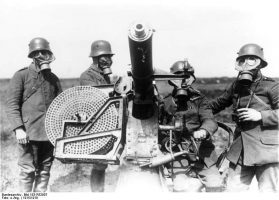
Wikimedia Commons
The State of Israel has been buying gas masks for decades from suppliers who also sold them to the Nazi regime, Israeli newspaper Yediot Ahronot reported Wednesday.
The country obtains its gas masks from two companies: the German firm Drager and the American MSA, which used to be German and whose previous name was Auer.
Based on recent findings, both companies manufactured gas masks that were used by Nazi soldiers as protection against the cyanide-based poison Zyklon B that was used to murder millions of Jewish people and other minorities in the infamous Nazi death camps between 1941 and 1945.
According to the newspaper, both companies have been long-time contractors of the Israeli government, furnishing gas masks used by the Ministry of Defense, the Fire and Rescue Authority, Israel Railways and the Israel Prison Service, among other state institutions.
The use of the masks during the Nazi genocide, or Shoah as it is called in Israel, was uncovered by researchers from Jerusalem’s Yad Vashem World Holocaust Remembrance Center, Yodiot reported.
Member of the Knesset (MK) _ the Israeli legislature _ Oren Hazan, of the ruling right-wing Likud party, introduced a law proposal to ban the government from conducting business with companies that collaborated with the Third Reich.
Following the 1991 Gulf War until recently, Israel would regularly distribute gas masks to its entire population, which meant it had to purchase massive amounts of the protective equipment.
In 2013, public demand for the masks quadrupled, as the Israel Postal Company, the government-owned corporation in charge of distributing them to the general population, faced copious requests due to fears of a possible US-led military intervention in neighboring Syria.
In January 2014, Israel’s authorities announced an end to the gas mask distribution policy, citing a “drastic” reduction of the threat of a chemical weapons attack.
Another reason given for ending the widespread distribution of gas mask kits was their possible inefficacy as a defense against nerve agents, as well as economic motives, since each mask costs around 380 shekels (90 euros/$100), and Israel’s population reaches eight million people.
Jerusalem, Aug 3 (EFE)



