


 SIGN UP FOR OUR
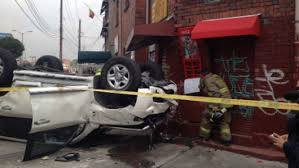
Traffic police and municipal governments in 16 of Costa Rica’s counties are joining forces to bolster monitoring at specific areas with high car accident rates, such as Jaco beach said the Ministry of Public Works and Transport this week.
The effort comes as the calendar approaches the end of the year, a time when car accidents historically spike in Costa Rica.
“We want to focus on areas that we have detected as dangerous and stop behavior from recurring in specific places, such as Barva, Heredia, Alajuela, Cartago, La Unión, San José, as well as Belén, Desamparados, Escazú, Garabito and Montes de Oca,” said German Valverde, Minister of Public Works and Transport.
In Garabito, on Costa Rica’s Pacific coast, transportation authorities have detected four areas with high accident rates, all of which are in Jacó.
In Desamparados there are six specific dangerous intersections, and three sections of roads that will be focused on, and in San José alone there are 11 different areas requiring extra preventive measures, said Valverde.
Local governments of Mora, Moravia, San Rafael de Heredia, Santa Ana and Santa Cruz de Guanacaste will participate in the initiative.
“Unfortunately, in the last quarter of the year, people overdo both liquor consumption and speed, as they participate in many Christmas and New Year parties, and then drive. They also may speed to get to a party or return home at dawn, are stressed by an increase in traffic jams because more people are out shopping, and that also increase the risks,” explained Valverde.
The Costa Rican traffic police together with municipal officers will be setting up special controls notably on weekends beginning in October and lasting until January. They will focus on 47 points identified as dangerous throughout the country.
Speeding is the top cause of road fatalities in Costa Rica, followed by lane invasions, reckless driving, and reckless pedestrian behavior, said the MOPT.



