


 SIGN UP FOR OUR
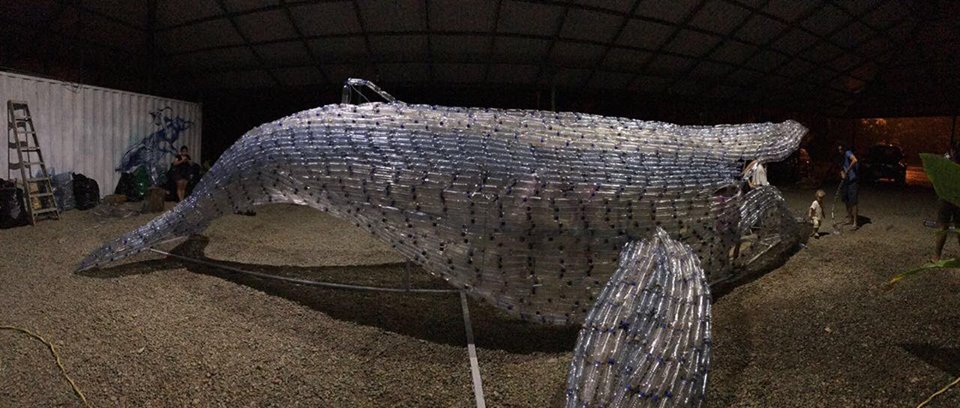
Every year thousands of tourists visit the Marino Ballena National Park, located in the South Pacific of Costa Rica and famous for the common sightings, specially certain times during the year, of whales and dolphins; however, this natural wealth is being threatened by climate change.
“Climate change is already here. It is not just a change of temperature, it goes way beyond that”, said to EFE Cristina Sánchez, a marine biologist who works for the Keto Foundation a program or the adaptation of the community of Bahia Ballena to climate change.
It hasn’t been hard for the foundation to convince the neighbors of Bahia Ballena of the existence of the phenomenon, since they have been noticing it year after year in the national park.
The most visible proof is in boundary stone 55, which was place in 1989 at a distance of about 50 meters from the water and today, almost 30 years later, it is covered by the ocean during high tides.
The exposed roots of the palm trees and their inclination is another indicator of the coastal erosion, a phenomenon caused by a raise of the ocean level with extraordinary tides which are a result of the increase in the temperature of the water. These tides also cause strong waves that cause the beach to lose sediments.
At the Marino Ballena National Park, a Costa Rican jewel, a tourist trail frequently floods, which didn’t use to happen some years back; coral reefs are also suffering the changes.
Sanchez explained that in 2016 when the impact of El Niño phenomenon was felt, the ocean here surpassed the 30⁰C temperature (86⁰F) which caused 94% of the colorful corals to turn white; many of them died.
In order to protect and care for this National Park, a project was started with financing from the Adaptation Fund of the UN’s Climate Change Convention.
This initiative, executed by Keto Foundation, has made the community take measures and work towards the protection of the park and even the economy of the area, which depends 90% in tourism.
Park rangers and organizations can now take data and measure the changes in the coast, the beaches and the forest, there have also been reforestation initiatives, reusing rain water, improving garbage management, and also educating the population, among other practices. The “Sea Star System” also was implemented as recognition of good tourism practices. SOURCE: EFE



