


 SIGN UP FOR OUR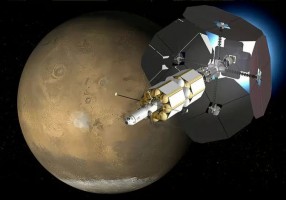
Wikimedia Commons
By Maria Clara Montoya
Lima, Jan 13 (EFE; additional context by The Costa Rica Star).– Scientists at Peru’s International Potato Center, or CIP, are working on a project to explore the possibility of growing potatoes on Mars.
The idea for the project came from researcher Julio Valdivia, who is conducting studies for NASA and found that the soil in an area in southern Peru is very similar to that of Mars, biologist David Ramirez told EFE.
The area is a desert in La Joya, located 50 kilometers (31 miles) southeast of Arequipa, where the soil is poor in nutrients, with a high salt content and as arid as on Mars, Ramirez said.
In addition to the soil’s features, the project took off because Peru is Latin America’s leading producer of potatoes, with 4.7 million tons of the tuber grown annually.
Peru has classified more than 4,000 native varieties of potatoes and the CIP keeps 4,500 varieties of potatoes and 7,000 varieties of “camote,” or sweet potato, at its facilities, making it the world’s largest collection.
Researchers have already identified genotypes for testing “improved variations” of some potatoes, and the next step will be to place the genotypes in controlled environments to observe their growth, the CIP’s Jan Kreuze said.
The CIP says scientists need to find genotypes of potatoes “tolerant to periods of heat, cold and drought” for Mars.
The project is being financed by an anonymous donor, but NASA is providing logistical support to the CIP by designing nursery chambers that simulate conditions on Mars.
“There are two proposals. One is to bring samples of desert soil to the CIP and another is to grow potatoes there and see how they perform,” Kreuze said.
After the Spanish conquered the Inca Empire in the 16th century, the Andean potato reached Spain and its consumption spread across Europe, helping prevent starvation for centuries.
The potato plant can adapt to regions where water is scarce and labor is abundant, providing nutrition, while requiring less land and enduring harsher conditions than any other staple crop.
In Ridley Scott’s “The Martian,” the main character, played by Matt Damon, is able to grow potatoes on Mars, and now scientists at the CIP are working to make the scene a reality. EFE
As reported by The Costa Rica Star last year, The Martian film was adapted by the novel of the same name by hard sci-fi author Andy Weir. It so happens that Mr. Weir incorporated an aerospace invention from Costa Rica in his book:
As NASA Hall of Fame astronaut Franklin Chang Diaz was [being] honored with the Buzz Aldrin Quadrennial Space Award in New York City, an author in the United States was accumulating accolades for his science fiction novel about a botanist stranded in Mars. The engine, so to speak, that propels Andy Weir’s novel The Martian is a [Variable Space Impulse Magnetoplasma Rocket] VASIMR, the revolutionary space propulsion system partly developed in Costa Rica under the direction of Mr. Chang Diaz.
Various VASIMR components were developed in Guanacaste, precisely at the Ad Astra Rocket Company facility near the Daniel Oduber Quiros International Airport in Liberia (LIR) as well as the EARTH University campus, also in Guanacaste. VASIMR is considered by many aerospace analysts to be the most viable propulsion system for future manned missions to Mars.



