


 SIGN UP FOR OUR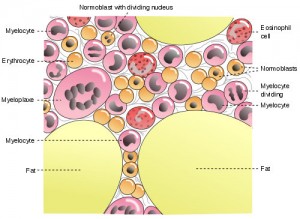
Human Bone Marrow
Molecular biologist Carlos Santamaria is a Tico researcher working at the University of Salamanca in Spain. Working with a team of microbiologists, Dr. Santamaria has been investigating several bone marrow specimens, looking for elusive proteins which could be crucial for the development of therapeutic solutions for the treatment of acute myeloblastic leukemia.
This type of leukemia is the most common type of blood cancer in adults, and the second most common in children. It is a very debilitating disease, and in 2010 more than 200 cases were diagnosed in Costa Rica.
Dr. Santamaria was interested in the protein-based events leading up to a condition known as myelodysplastic syndrome, also referred to as pre-leukemia, which in essence indicates a dysfunction of blood cells. The work of molecular biologists like Dr. Santamaria involves taking a look at the primal organisms and substances that make life possible, and thus allowing improved prevention and treatments to be developed.
The myelodysplastic syndrome that Dr. Santamaria’s research team studied is believed to have no cure. According to the Mayo Clinic,
Treatment for myelodysplastic syndromes usually focuses on reducing or preventing complications of the disease and its treatments. In certain cases, myelodysplastic syndromes are treated with a bone marrow transplant, which may help prolong life.
For this research study, Dr. Santamaria drew on the conclusions of existing research that indicated that the clue of the syndrome could be found in the cells that make up bone marrow. That study had employed laboratory rats; Dr. Santamaria took bone marrow samples from 33 myelodysplastic patients and 24 who did not have a history of the syndrome.
There are two stem cells that produce our bone marrow, mesenchymal and hematopoietic. These are present elsewhere in our bodies; the latter in our fatty tissue and tendons, and the former essentially produce our blood cells. The immediate focus of the Tico researcher was on the Dicer protein levels of mesenchymal cells. As expected, low levels of this protein were manifest in the bone marrow samples of the myelodysplastic patients. Another finding was centered on the low Drosha protein levels. Both proteins have an effect on microRNA, which is essential in the makeup and production of cells.
The results of the study will help medical researchers and practitioners to develop early diagnostics of leukemia and improved treatments.
To get a sense of the work of Dr. Santamaria’s research team, think about the average size of a red blood cell: about 6 to 8 micrometers. Dr. Santamaria works at the molecular level; he is interested in the smaller proteins that make up a cell and the even smaller molecules that make up proteins.
Source: La Nacion



