


 SIGN UP FOR OUR
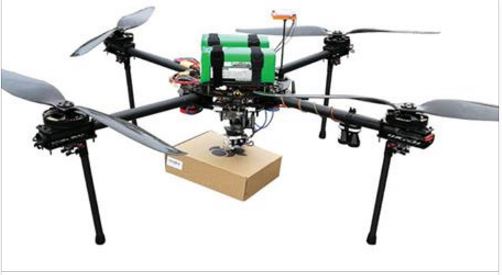
Starting August 13, the drones and their pilots must have the respective license given out by the General Direction of Civil Aviation (DGAC); as of that date regulation DO-001-OPS-RPAS which was published in the official journal La Gaceta on June 8 will be officially enforced.
The regulation of drones or Remotely Piloted Aircraft Systems (RPAS) is established to guarantee the security of aerial navigation, operating this artifacts inappropriately could cause serious accidents and threats.
Drones are classified by their weight:
Micro RPAS are those with a weight equal or over 100 grams
Small RPAS with weight equal or over 2 kilograms
Light RPAS those with a weight equal or over 25 kilograms
Big RPAS with a weight of more than 150 kilograms
All drones that weight over 25 kilograms must be registered in the National Registry and have a certificate of aerial navigation provided by the DGAC.
According to the new law those who want to operate an RPAS with private or commercial purposes require a certificate given by the DGAC, the requirements for which include:
• Operator/Pilot must be at least 18 years-old and have the high school diploma (Bachillerato)
• Have a medical certificate equivalent to Class 2 of RAC-LPTA, extended by one of the doctors authorized by the DGAC which must be renovated every 60 months, or every 24 months if the person requesting it is over 40 years-of-age.
• Pilot/Operator must complete a 48 hour theoretical training and 10 hour of practical training in schools authorized by DGAC or from an equivalent international organization but approved by DGAC.
If the drone is to be used with commercial purposes the operator must have a certificate of exploitation given by the Technical Council of Civil Aviation and the operation certificate by the DGAC. They must also have a civil responsibility insurance policy to cover possible damages to third parties. Drones used for commercial purposes also require the homologation certificate given out by the Superintendence of Telecommunication.
The annual license has a cost of $1,874.00; this permit will allow a company or individual to fly an unlimited amount of drones, however, each pilot or operator much have his or her own commercial drone pilot license which has a cost of $94.00.
Drones used for non-commercial activities, scientific activities, research, search and rescue, among others, must operate the drones away from public areas, large activities or groups of people (unless they have prior authorization) where it can represent a danger for the population. There are also limits established regarding how high the RPAS can fly (usually not more than 120 meters or 400 feet), the distance it must keep from houses or buildings and of course the airport. The law also defines areas that are off limits to drones.
The Costa Rican Association of Drone Operators (Acodron) has expressed its disagreement with some of the regulations, for example the need to have a high-school diploma and the high costs established by the DGAC.
Commercial companies that are already operating drones will have 6 months to get certified, counted as of the moment the DO-001-OPS-RPAS is validated (August 13), in other words they have time until February 13, 2018 .



