


 SIGN UP FOR OUR
 By Wendy Anders
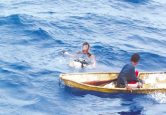
Mandro Linton (19) and Rubén Bolaños (29) were the two most recent divers to die harvesting sea cucumbers in Nicaragua; photo courtesy of La Prensa.
Two recent deaths bring the total to seven sea cucumber divers who have died in Nicaragua’s North Caribbean sea since September of this year, reported Nicaragua’s daily La Prensa last week.
Meanwhile, two deaths have been recorded this year on the country’s industrial lobster boats for a total of nine diving worker deaths so far in Nicaragua in 2016.
The deaths are attributed to “decompression syndrome” experienced by divers who harvest sea cucumbers, said Evenor Saballos, leader of the Puerto Cabezas-based Sibumiraan Diver and Seamen Union, to La Prensa.
Sea cucumbers are are marine animals with a leathery skin and an elongated body. They are found on the sea floor worldwide with concentrations in the Asia-Pacific region. The harvested product is called trepang, bêche-de-mer or balate, according to Wikipedia.
According to Nicaraguan coastal researcher, Renfred Paisano, alcohol and other drugs such as marijuana and crack are often used by divers before undertaking work in an attempt to increase their resistance when they have to stay submerged for several hours.
Artisanal fisherman Juan Salviñas of Sandy Bay North told La Prensa that divers leaving his community sleep and eat for two weeks at a stretch at sea, and the air breathed through compressors on dives is harmful to the divers’ health.
Decompression syndrome or disease occurs when nitrogen moves to the lungs and, when expelled, in some cases can form bubbles in the blood which accumulates in joints, causing pain or even death.
The only possibility of survival for severe cases is to be treated in a hyperbaric chamber. There is only one such treatment chamber along the entire northern Caribbean area of Nicaragua, reported La Prensa – located at the Hospital Nuevo Amanecer in Bilwi.
“A large number of divers are affected with Type I and II decompression syndrome, characterized by muscle pain, joint pain, headaches and earaches, migraines, numbness of the limbs and generalized malaise, some with physical injuries and even paralysis,” said Paisano.
A main aggravating factor for divers’ health is the lack of access to health care, which causes divers to self-medicate to relieve pain and discomfort; some inject calcium, others take vitamins, and others use alcohol in an attempt to relax their joints, said Paisano to La Prensa.
According to the Sibumiraan Divers Union, there are 1,800 divers engaged in sea cucumber harvesting in Nicaragua; and 1,500 dedicated to lobster fishing on industrial ships. Lobster fishers work on some 800 boats. Of the total 4,100 registered fishing boats in Nicaragua, only 1,500 are insured, said La Prensa.



