


 SIGN UP FOR OUR

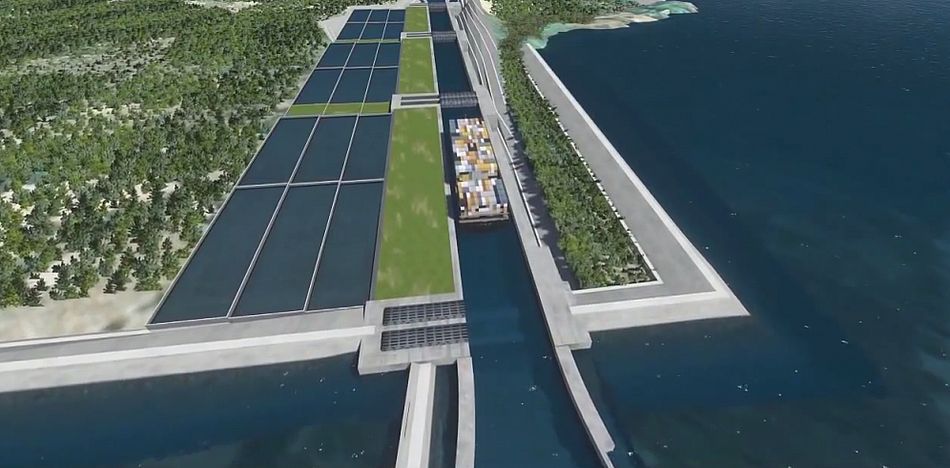
Nobody has heard much these days about the once highly touted interoceanic canal that Nicaraguan President Daniel Ortega proposed to build. Thousands of jobs, and millions in investments were gloriously promised to Nicaragua, without apparently any secure plans for carrying out the mammoth project.
Four years after an agreement was signed between the Nicaragua government and a Chinese investor, no steps have been taken to begin the project.
With no apparent investments, nobody being hired, no signs of construction, or land being set aside, it appears the latest canal plan may be buried.
The canal has seen some action, with 87 environmental protests against the proposed project over the past four years. Doña Francisca Ramirez, one of the protest movement’s leaders, was interviewed by El Diario de Hoy as saying, “We do not believe in that canal, and we will not accept it.”
In June 2013, the Nicaraguan National Assembly passed Law 840, authorizing Ortega to transfer the project to Wang Jing, a little-known Chinese businessman, and his investor group, Hong Kong Nicaragua Development. Since then, project has been on stand-by. Wang hasn’t visited Nicaragua for over two years.
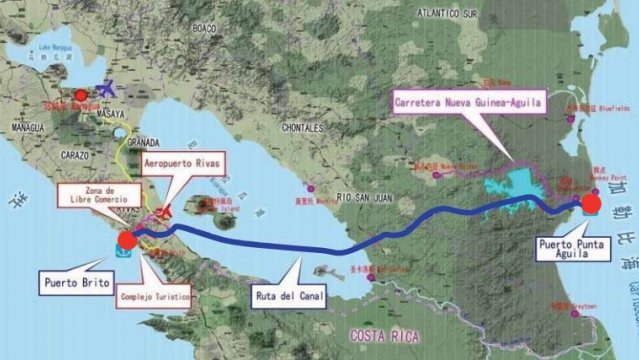
Law 840, known as the “Special Law for the Development of Nicaraguan Infrastructure, Canal Transport, and Free Trade Zones,” spelled out the conditions for the construction of the 278 km long canal which is estimated to take 16 years to build and cost US$50 billion.
Under the highly controversial law, the team designated to build the canal would be protected with immunity under Nicaraguan law. It also stipulates that Wang and his family will have ownership rights over the canal until 2129. The agreement included a clause requiring Wang to pay Nicaragua US$10 million over 10 years.
The project’s infrastructure development plan includes two deepwater ports (one in each ocean), an airport, two free trade zones, a railroad, a wet canal, and an oil pipeline.
The project has many economic, environmental and social risks associated with it, as it passes through indigenous lands, fragile ecosystems and would displace an estimated 400,000 rural poor. On a daily basis, with no sign of Wang and his investors, there are increasingly more questions than answers about the proposal: Is Wang the right person to build the canal; where would the displaced communities relocate; and what about the natural and cultural destruction involved in such a protect, is it justified?



