


 SIGN UP FOR OUR
 By Wendy Anders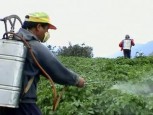
Oxfam Germany’s recently published report detailing working and living conditions for Costa Rica’s pineapple and Ecuador’s banana workers, “Sweet Fruit, Bitter Truth,” does not mince words.
“This investigation reveals (too) many violations of human and labour rights in the production of bananas and pineapples,” said the report based on numerous interviews conducted with workers and industry experts earlier this year.
Costa Rica provides 66 percent of the global $865 million pineapple market, with Germany the largest pineapple purchaser in the European Union. This is in part due to the 45 percent decrease in pineapple import prices in Germany from 2002 to 2014, said the report.
Meanwhile, as production costs have gone up, suppliers in Ecuador and Costa Rica have had to cut costs at the expense of the safety and well-being of workers, said the report.
When Dr. Franziska Humbert, Oxfam Germany’s business and human rights advisor realized that despite supermarkets having agreed to sustainable and social responsiblity principles a decade ago, the countries they were purchasing from were experiencing on-going problems such as contaminated ground water in pineapple growing regions of Costa Rica, poverty wages, lack of union representation, poor living conditions, and use of dangerous pesticides.
Humbert said, “The conditions on the plantations in Costa Rica and Ecuador have hardly improved since 2008 or 2011, when the last two Oxfam studies on pineapples and bananas were published. However, more and more plantations are certified, notably with Rainforest Alliance’s green frog label.”
Germany’s top four supermarket chains Aldi, Lidl, Edeka and Rewe, “share the blame for the untenable conditions which prevail in the banana and pineapple industries: they abuse their market power in forcing down prices paid to producers and suppliers. For example, the import prices for pineapple decreased by around 45 per cent from 2002 – 2014, despite increasing production costs. This contributes to the intensification of traditional exploitative structures in both countries, to the fact that the plantation workers’ wages in Costa Rica and Ecuador are too low to support a family, and to the perpetuation of unstable employment conditions,” said the report.
Costa Rican company Agricola Agromonte, a producer for Aldi, Edeka and Rewe, was singled out in the report for reprisals against workers who get involved with unions.
In addition, the extensive use of pesticides is very concerning. The report says that to obtain two pineapple harvests per year, Costa Rican producers apply more than 50 different chemical substances for a total of between 30 and 38 kg of chemicals applied on one hectare of pineapple cultivation. The report says that Costa Rica permits the use of substances like Bromacil and Paraquat which are not licensed for use in the EU.
The report concluded by saying that supermarkets have a responsibility to ensure suppliers maintain humane working conditions, use sustainable farming practices, and pay living wages to producers of the products they retail.



