


 SIGN UP FOR OUR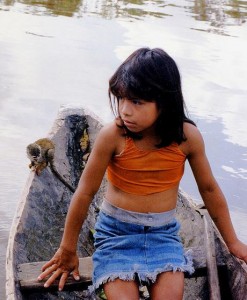
A Peruvian Child of the Amazon
RPP Noticias, a major news broadcaster in Peru, has announced that the Executive Branch of the South American country has approved a legislative measure that will prohibit all physical aggression against children and adolescents. With this historical approval, Peru will join Costa Rica, Uruguay and Venezuela in Latin America as countries where corporal punishment of children is a serious criminal offense.
News of the passing of the legislation were announced by Ana Jara, who is the current Minister of Women’s Affairs in Peru. The law is strict, as it prohibits the use of any physical corrective action that may harm the physiological or mental integrity of a child.
According to figures cited by RPP, in 2011 there were 11,215 cases of physical child abuse reported in Peru. Many of such cases were also tied to sexual motives, and 68 percent were perpetrated against young girls. In most situations the biological parents of the victimized children were at fault, although sometimes teachers and other caretakers were involved.
The legislative project will now head to the Peruvian Congress for further debate and ratification.
Corporal Punishment in Costa Rica
The pertinent law that prohibits corporal punishment of children in Costa Rica was finalized in 2008, and it is very clear in its intent and scope. Corporal punishment of children is prohibited in any setting; whether at home, school, alternative care institution, or juvenile detention center.
LEY 8654 – DERECHOS DE LOS NIÑOS, NIÑAS Y ADOLESCENTES A LA DISCIPLINA SIN CASTIGO FÍSICO NI TRATO HUMILLANTE
“Parental authority confers the rights and imposes the duties to orient, educate, care, supervise and discipline the children, which in no case authorizes the use of corporal punishment or any other form of degrading treatment against the minors.”
“Children and adolescents have a right to receive counseling, education, care and discipline from their mother, father or tutor, as well as from their caretakers or the personnel from educational and health centers, shelters, youth detention or any other type of centers, that in no way represents an authorisation of any sort to these parties for the use of corporal punishment or degrading treatment. The Patronato Nacional de la Infancia (PANI) shall coordinate with the institutions conforming to the National Integral Protection System and NGOs, for the implementation of educational campaigns and programs directed to parents and other adults in custodial or caring roles.”
Sources: RPP and Costa Rica’s Public Defender



