


 SIGN UP FOR OUR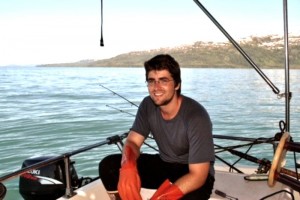
Cody Dial
The information herein mostly comes from the GoFundMe online fundraiser set up by the parents of Cody Roman Dial, a college student from the United States who arrived in Costa Rica with adventure in his mind. Cody intended to hike across Corcovado National Park in our Southern Pacific region; he has been missing since July of 2014.
For the purpose of style and flow of prose, The Costa Rica Star has slightly edited the words below, which have been written by Cody’s parents. We have also included a short passage from an article written by Damon Tabor for Men’s Journal (it is an excellent read), and we are embedding hyperlinks for context. We truly hope that Cody will be found, and we encourage our readers to help Cody’s parents and keep them in prayer.
Our 27 year old son, Cody Roman Dial, disappeared on Costa Rica’s Osa Peninsula in July 2014.
On the morning of July 9th, seven months into an overland journey starting in Mexico, he wrote one of his usual emails outlining his plans to family and friends. He said he planned to cross Corcovado National Park, a huge wilderness of rain forest, tropical coastline, and rugged mountains, alone for 4-5 days. He articulated his route and included a link to a map.
We had received similar emails about his solo crossing of Guatemala’s Peten wilderness, a river trip descending to the Mosquito (Miskitia) Coast of Honduras and Nicaragua, and a selection of volcanoes and canyons in between. These trips would last upwards of ten days and were followed up by articulate stories of the places and animals he had seen, the people he met, the experiences he’d had.
This time we did not receive the usual “I am out of the wilderness” email; on July 24th, ten days after he should have been out, I contacted Corcovado National Park and the U.S. Embassy in Costa Rica and reported him missing. Due to the way my emails were threaded, and the fact I had been away on my own trip, we didn’t fully realize he had actually left on his trip until that day, July 24th.
By July 26th I was in Puerto Jimenez, where Cody Roman had written that he was shopping for food before his trip. With me was my Spanish speaking friend, Thai Verzone, who had dropped everything to come help me find my son. The night we arrived we discovered — before the police, the Red Cross, or the US Embassy — the hostel where he had spent the night of July 8th, where he left his non-essential gear and personal items to lighten his load for his trip.
My wife Peggy and I raised our son on wilderness and biological research trips around the world. By the time he arrived in Mexico in January 2014, he was no stranger to tropical rainforests. When he was three years old, the two of us traveled to the Caribbean as I scouted my PhD research site for a rainforest experiment. At eight years of age, he spent three weeks at a research station deep in Indonesian Borneo along with the family. At 12, he had walked with my tropical ecology class across Corcovado. Now he was exploring the wildest areas of Central America.
From the beginning confusion surrounded the search in this remote, rural area where all “gringos look the same” to countryside people who don’t keep close attention to dates or time. There was another gringo who looked like Cody Roman, but this one was with a guide, a week after he should have been out from his traverse and miles away from his planned route and outside the park.
Also confounding the search is an antagonistic relationship between rangers from the National Park Service and local gold miners, many of whom sneak into the park to mine illegally. My friend Thai encountered such an illegal gold miner, who with three others had seen a gringo three hours from the end of the road on July 14th, about the time when Cody Roman should have been ending his trip and running out of food.
This miner and his three companions are the only ones to describe a gringo who matches our son, his behavior, his equipment, and the fact that he was in a place where he’d likely have ended up given the terrain, his map and compass, and the network of illegal mining and poaching trails he would have encountered on his traverse.
As the Red Cross would not allow me to participate in their search, I was forced to fly friends down to help me conduct my own, clandestine search. I’ve spent nearly six weeks here in Costa Rica now as I write this. Over half of those days I have searched jungle trails and bushwhacked past vipers looking where he may be lost and injured, rappelled over waterfalls into inaccessible canyons where he may be trapped, tracked down miners hours from the road to interview them about gringos they’d seen. The rest of the time I have talked to Red Cross officials, park rangers, the Costa Rican version of the FBI called Office of Judicial Investigations (OIJ), as well as powerful politicians in San Jose and the U.S. I have also posted flyers all across the southern Osa Peninsula and hired a private investigator.
After the first two weeks, including ten hours of helicopter time, the Red Cross and the Park Service announced they were pulling out. The helicopter would have helped lure an injured person into an opening, but otherwise even with infrared sensors we could not see past the multiple layers of leaves that make up the rainforest. The Red Cross had searched all the major valleys and ridges, to no avail. My friends and I had combed through the one square kilometer surrounding the area where Cody Roman had last been seen and found nothing. Together these searches suggested that maybe he was not lost and injured in the jungle, but rather the victim of foul play.
So to continue the search we are reaching out for donations. It’s been two months. Perhaps a miner will find him or his equipment. Or perhaps someone will come forward with a story that leads to him. In any event we need to keep the search alive.
From Lost in the Jungle: The Search for Cody Dial by Damon Tabor, Men’s Journal – March 2015 issue
On July 3, Cody crossed the border from Nicaragua into Costa Rica. At some point — it remains unclear exactly when — he arrived in Puerto Jiménez, a fishing town on the Osa’s east coast. Five days later, he checked into a budget hostel called the Corner. The following morning, he emailed Dial and his mother, Peggy, an outline of his intended route through Corcovado.
On July 10, Cody set out for Corcovado. He carried a backpack containing food, his tent, and a cooking stove. He also had the machete and a compass, along with an imprecise map of the park he’d printed off the internet. His proposed route would skirt a popular tourist trail in favor of an off-limits path used mainly by illegal gold miners.
“I am not sure how long it will take me, but I’m planning on doing four days in the jungle and a day to walk out,” Cody wrote in his last email. “I’ll be bounded by a trail to the west and the coast everywhere else, so it should be difficult to get lost forever.”
January 2015 update from Roman and Peggy Dial
Peggy and I have been down here in Costa Rica for about a week and a half.
We met with a Padre (priest) at the Catholic Church here in Puerto Jimenez. He and the other two Padres serve 23 communities and offered to speak to their congregations and post our fliers at their chapels. We also drove to a few places and hung new flyers; most places still have the old ones. Our new ones are one-page letters giving some of the details and include two recent photos of Cody Roman that other travelers took of him in Central America and a contact email. Our hope is that something new will show up, or someone decides to talk. I also hired a guide to accompany me to a few side trails I didn’t explore before.
Unfortunately Peggy’s surgery on her broken wrist a month ago prevented us from searching other side trails.
On this trip learned nothing new, although we did drive down to Paso Canoas and talk briefly to the Panamanian DIJ (like Costa Rica’s OIJ) there. We went to the Panama border because Cody wanted to go to Panama but had no return ticket and very little money — although we are not sure how much money, as the credit union has not yet provided us any information. So we went to the Panama border to see if perhaps he had tried to sneak in and was caught and thrown in jail. We wanted to see how easy it would be to sneak across (very easy) and what happens to those who do sneak over and are caught at the chokepoints/checkpoints a dozen kilometers out-of-town. So we met with some border police officers and the DIJ. They said illegal crossers are caught and then deported.
Cody Roman had written one of his close friends on July 9 that he was in Costa Rica and that it was unaffordable. He said he was planning to bushwhack around in Corcovado as “practice for the Darien” as he had “been entertaining notions of overlanding the Darien Gap, but it’s pretty [much] insane. Other than the difficulties of remote jungle travel in the wet season, there are drug smugglers and bandits, and paramilitaries and guerrillas. The Panamanian border police also aren’t letting anyone overland, so they also have to be avoided.”
Cody went on to say that, “I probably won’t end up doing the Gap into Colombia, though I am fairly certain I’ll go to Darien National Park. I want to visit the major jungles of Central America. I’ve briefly visited the Lacandon in Mexico, Guatemala’s Peten, Belize’s Maya Mountains, and the Miskitia in Honduras & Nicaragua. Corcovado & Panama´s Darien are all that’s left.”
He wrote that he planned to head to Hawaii then Alaska at the end of August to wrap up his thesis.
He wrote, “I may cut my trip short due to funds. I don’t have a ticket back yet and Costa Rica is burning through my cash. Otherwise, I wanted to see Colombia and climb some mountains and go trekking. I think South America is going to wait for another trip, though.”
I plan to fly to, then drive from, Panama City to Yaviza at the end of the PanAmerican Highway and the beginning of the Darien.



