


 SIGN UP FOR OUR


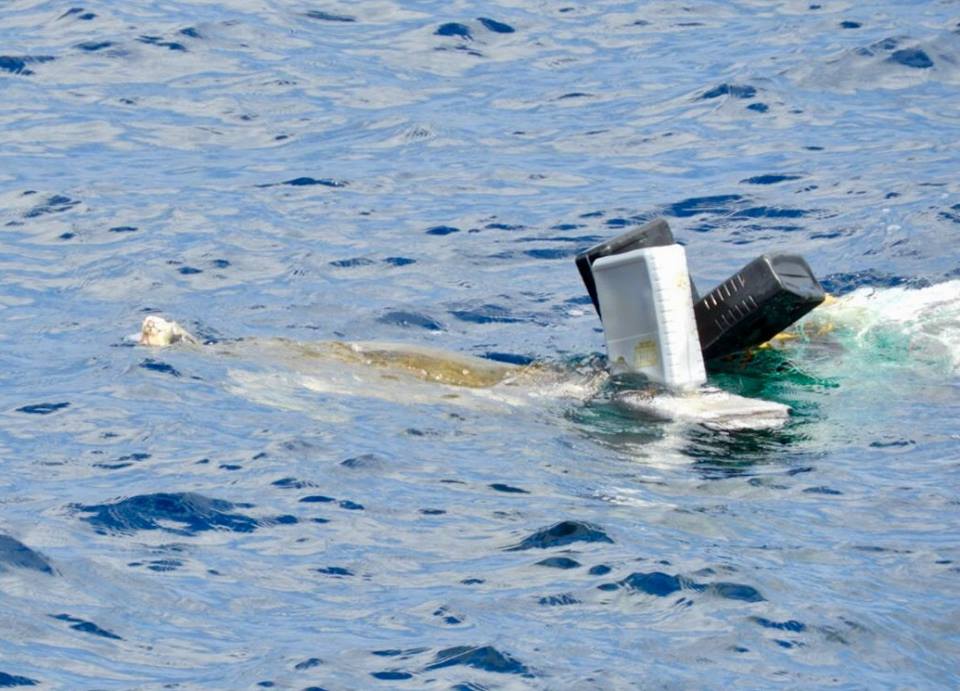

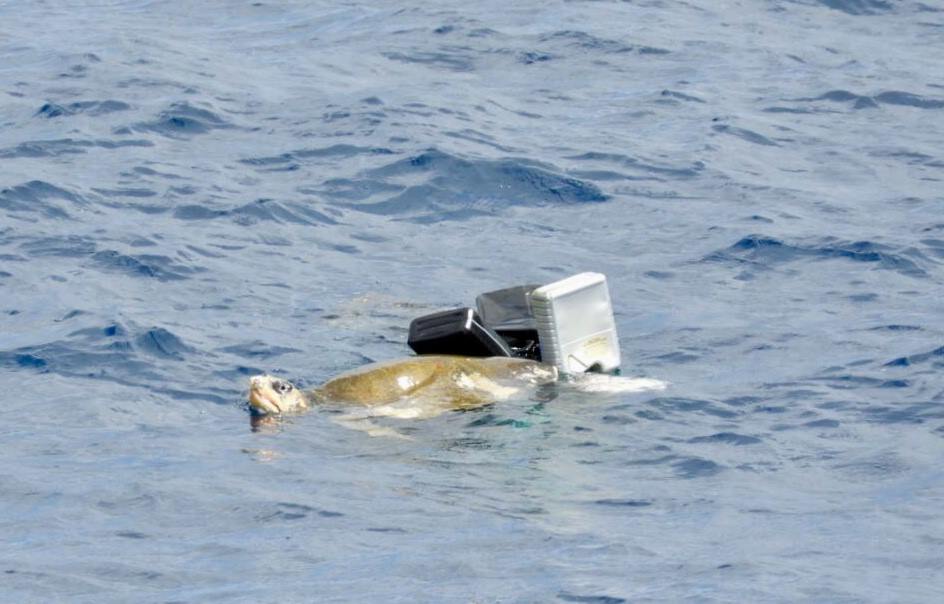
The images of a Kemp’s Ridley sea turtle entangled in a fishing net and carrying several plastic bottles in the middle of the ocean taken earlier this month by scientists during the expedition between Galapagos Island in Ecuador and Coco’s Island in Costa Rica, has raised awareness on how the contamination of the oceans is affecting the marine life.
Scientists freed the Kemp’s Ridley sea turtle, an endangered species, from 60 kilograms of fishing line and many plastic bottles. “At high sea we saw something struggling in the surface”, commented Esteban Herrera, director of Protected Wildlife Areas of Costa Rica and part of the investigative team in the expedition, “This species of turtle is an endangered species. We got close and were able to get her on the ship. We wanted to set her free quickly because we noticed she was exhausted, possibly it had been trying to free herself for days and trying to survive”.
The turtle was freed from the trash, released back into the ocean and was in good condition. This is real evidence of the large amount of trash present in the oceans.
The purpose of the Galapagos-Cocos expedition was to identify the marine migratory species that use this route and quantify their distribution, abundance and diversity of their predators; also, scientists carried out research studies with the purpose of highlighting the importance of implementing conservation efforts beyond the borders to protect this important marine corridor for migratory species.



