


 SIGN UP FOR OUR
 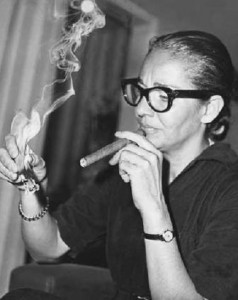 Isabel “Chavela” Vargas Lizano was born during the first quarter of the 20th century in San Joaquin de Flores, a coffee-growing region of Heredia that former President Oscar Arias Sanchez calls home. When she was 17 years old, Chavela Vargas left Costa Rica for Mexico, a country where she would not only find fame and glory, but also the deep respect and love of the Mexican people.
For the second time in history, Chavela Vargas has been nominated to the prestigious Prince of the Asturias Award by Mexico’s National Council of Culture and the Arts. Chavela was nominated in 1994, but at that time she lost to classical Spanish guitar master Paco de Lucia.
La Macorina
Chavela Vargas is known as the “Voice of Mexico.” She began singing in the mid-1950s, and she left Mexico at some point for a stint in Cuba. It was in that island nation that she first found success with a poem written by Spanish writer Alfonso Carmin. The poem she adopted, La Macorina, deals with the life of Maria Calvo Nodarse, the first woman to be given a driver’s license at the turn of the 20th century. La Macorina was legendary in Havana due to her intoxicating beauty and femme fatale ways. She used her charms to climb to the highest social circles in pre-Castro Cuba, and by her own accounts about a dozen of the richest and most powerful men of the island nation courted her and showered her with gifts. At some point she owned nine luxury vehicles and four mansions, but she did not age gracefully and was forced to sell her possessions late in life.
The legend of La Macorina inspired Chavela Vargas deeply. As a young Tica, and later as a lady living in Mexico in the midst of the 20th century, Chavela had not heard of such a strong-willed woman who so easily floated in the machismo-filled Latin American societies. Chavela’s first hit song was initially censored in Mexico, which lead to its adoption as a battle anthem for the burgeoning guerilla factions in Latin America. La Macorina was sung by rebels, freedom fighters, and later drug traffickers as they traversed the Central American jungles armed with defective Kalashnikovs.
La Llorona
Chavela Vargas has always been a free spirit and a woman who has never been afraid to speak out. She wore pants at a time when it was not considered very ladylike to do so, and she never had any qualms about saying in public that she did not like men, openly courting Mexican painter Frida Kahlo, and even moving in with Kahlo and her husband Diego Rivera. Mexican high society was not too sure about what to think of Chavela, but among the lower and middle classes of Mexico, she is the Queen of all Rancheras. Chavela’s affair with Kahlo was immortalized in her song La Llorona.
Chavela Vargas turned 93 years old earlier this month. She still performs at the most acclaimed venues in Mexico. The Prince Asturias awards ceremony will take place in October.



