


 SIGN UP FOR OUR
 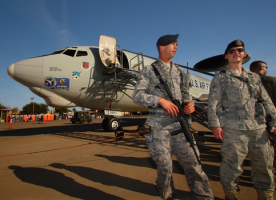 A state-controlled news media organization from Venezuela recently apologized for reporting that the United States military industrial complex that the late President Eisenhower warned the world about had reached Costa Rica. The report specifically mentioned a U.S. base in sunny Guanacaste, with 46 warships, an aircraft carrier, 200 gunships, 6 fighter jets, and 13,000 combat troops. While it is acceptable to chuckle at this journalistic faux pas, it is a sad reminder of the ongoing and precipitous decline of press freedom in Venezuela.
The news report looked straight out of the pages of satirical and raucous publications such as the Duffel Blog or The Onion. In fact, one could almost see the authors behind El Pejibaye in Costa Rica as the sources approaching the Venezuelan reporters and then having a big laugh about it. President Laura Chinchilla and Minister of Communications Carlos Roverssi were certainly not laughing, and with good reason: TeleSUR, the media group that reported the phantom military base in Guanacaste, is of a certain stature.
TeleSUR is an effort by the administration of the late President Hugo Chavez of the Bolivarian Republic of Venezuela to integrate news and cultural programming in South America to the rest of Latin America and the world. TeleSUR is chartered by the governments of Argentina, Bolivia, Cuba, Ecuador, Nicaragua, Uruguay, and Venezuela. It is a 24-hour channel similar to the BBC, Deutsche Welle, Al Jazeera, or CNN, and it has interests beyond viewer ratings; TeleSUR aims to promote the interests and culture of its partner countries.
Those who think that the TeleSUR report may have intended to denigrate the close ties between Costa Rica and the U.S. should take a moment to evaluate the unstable political situation in Venezuela and the dire straits of its news media. Censorship in Venezuela is rampant, and a recent article by John Otis published by the Committee to Protect Journalists, illustrates the hapless situation journalists and the media in that South American country are dealing with:
Due to government currency controls, securing dollars to buy [paper for newsprint] can take months. Reserves of newsprint have fallen to an all-time low, according to news reports.
Many Venezuelan journalists say they believe this is a deliberate strategy by the socialist government of President Nicolas Maduro to muzzle critical voices.
Different sectors of society make their complaints through the media and to stop this, the government is restricting newsprint imports, says David Natera, editor of the daily Correo de Caroní based in Ciudad Guayana and president of the newspaper industry group Venezuelan Press Block.
Press freedom in Venezuela is at an all-time low, particularly with the recent government shutdown of the Colombian NTN24 news channel, which has admitted to reporting on the ongoing civil unrest in Caracas and other cities. The media in Costa Rica is currently mourning Freedom House’s report in which the country no longer leads Latin America in press freedom due to a couple of incidents that the Costa Rica Star has reported on, but the situation here is thousands of times better than in Venezuela.
Back to the alleged U.S. military base in Guanacaste: Radio Tica recently reported that Minister Roverssi has sent a message to union leader Albino Vargas for being the alleged source of that fantastical report by TeleSUR. A response on this is forthcoming, but even if TeleSUR chose to produce a news segment based on a single statement, one cannot help but wonder if they even have the resources to conduct fact-checking.
There have also been rumors about nepotism at state-controlled media outlets in Venezuela, whereby people with no journalistic experience or even preparation are being hired as reporters. There is a strong chance that there was no malice by TeleSUR in the report about the phantom base, but the incompetence does not paint a favorable picture of the state of the press in Venezuela.



