


 SIGN UP FOR OUR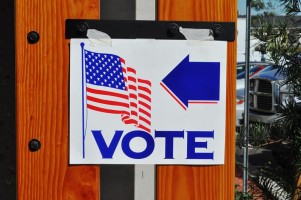
Wikimedia Commons
By Britt Nelson
Editor’s note: The views expressed by guest columnists are not necessarily those of The Costa Rica Star, its advertisers, or its staff.
The Independent voter has yet to speak.
Presidential Campaign 2016 will be remembered as the year the Independent registered voter weighed in and turned the tides. The math is simple: Out of all registered voters across America — 42 percent are now Independent, 32 percent are Democrats and 25 percent are Republicans. For Democrats and Republicans this math is very bad news, and it’s not “fuzzy math.”
Independent voters are the fastest growing segment of the voting public. Increasingly, voters are becoming disillusioned with the two-party system of the U.S. Neither one gets much done that matters anymore gridlock, constant bickering and finger-pointing between the major players in Washington is the norm. The American public has a very low opinion of the U.S. Congress, and all 435 members of the U.S. House of Representatives are up for election this year along with one-third of the U.S. Senate, which means 34 seats of which 24 are Republican. If America wants to clean house, this is the year to do it because meaningful change is in the air.
Independent voters and those whom we can define as “fed up” are turning to political outsiders like Republican New York billionaire Donald Trump and Democrat Vermont Sen. Bernie Sanders. Establishment candidates like former Secretary of State Hillary Clinton, a Democrat, and former Republican Florida Gov. Jeb Bush are finding it’s not easy to run in this political climate. Clinton appears to be losing steam while former front-runner Bush dropped out weeks ago.
Women and African American voters are propelling Clinton forward, but the Independent voter has yet to speak. Young people and older voters are keeping Sanders alive, but the Independent voter has yet to speak.
This year’s primaries and election caucuses have seen record voter turnout across the country. Voter interest is high and what’s at stake for Americans could not be higher. But Independent voters, a whopping 42 percent, will not get their chance to speak until the final day – Nov. 8, 2016 – the national election. There is something wrong with this picture, but for now, that’s the way the U.S. electoral system works mainly because Independents had far fewer numbers in year’s past. Serious election reforms are needed to include Independent voters in the entire election process. For now they are being left out in the cold.
In two states where Independents were allowed to vote, such as Michigan, Sanders was trailing in the polls behind Clinton by 20 points, but he scored heavily with the Independent vote and beat Clinton. Trump did the same thing in New Hampshire by winning the Independent vote in the nation’s first primary election.
With their numbers growing each year, Independent voters are also showing up at the polls – in greater numbers than Democrats or Republicans — to express their disgust with the business-as-usual Federal government.
Pollsters, eager to make a prediction on the outcome of a state or national election, are finding Independent voters elusive and hard to predict, which drives establishment candidates crazy as they watch support from Independents go to the outsiders.
The Independent voter is not to be confused with The Silent Majority, a term most famously used by former President Richard Nixon during his November 1969 speech to the nation asking for the support of the “silent majority” in his handling of the Vietnam War. Nixon claimed the “silent majority” represented those Americans that did not protest the war as millions of others did back then.
Trump has now adopted the term as his own, and he is using it to wake up voters and avoid a third term for President Obama by electing Clinton. But he is also using the term aimed at Independent voters who have yet to speak.
Sanders is popular with Independent voters because he wants all Americans to get what they have already been paying for with their tax dollars being misspent and squandered -year after year- by the Washington congressional establishment. Trump is also liked by Independent voters for many of the same reasons.
Come November 8, it will be those Independent voters who will decide the next president of the United States, all 435 members of Congress, plus 34 seats in the Senate. Heads will roll.
About the Author



